
German recipes
The German recipes on this page cover both sides of German home cooking: hearty everyday food, and a baking culture where cake with afternoon coffee is part of the weekend. Each one explains the step that makes the dish work, like the soaked bread roll that keeps frikadellen juicy.
Cook frikadellen or spätzle for dinner, and flammkuchen when you want a crisp, thin base of bacon and onion out of a very hot oven. Bake brezeln for an afternoon snack and apfelstrudel for Kaffee und Kuchen, served warm with vanilla sauce. Servings scale up for guests, and the ingredients you are missing go onto a shared shopping list.
20 recipes
 Brezeln🇩🇪 German recipes · Snack · 1 h 45 min
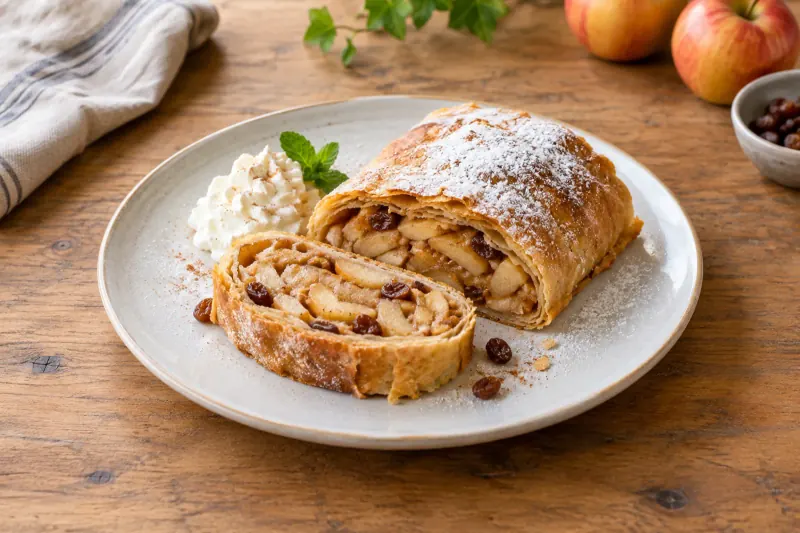 Apfelstrudel🇩🇪 German recipes · Dessert · 2 h 30 min
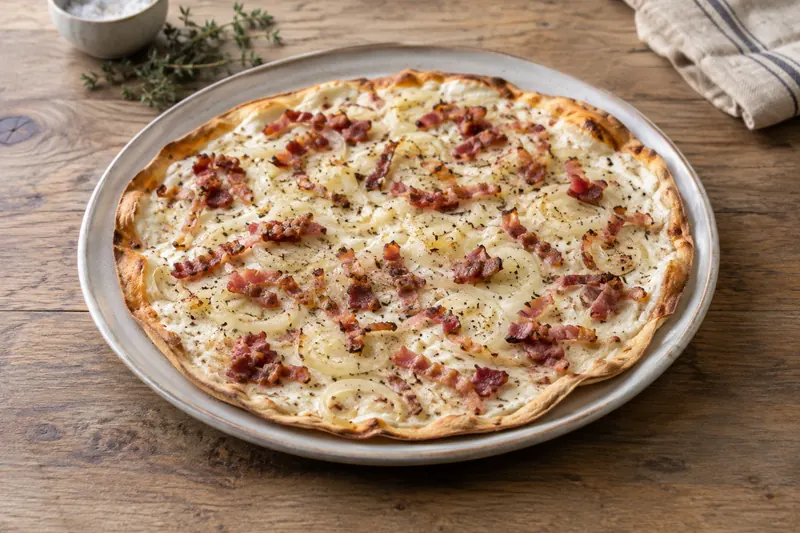 Flammkuchen🇩🇪 German recipes · Dinner · 1 h 10 min
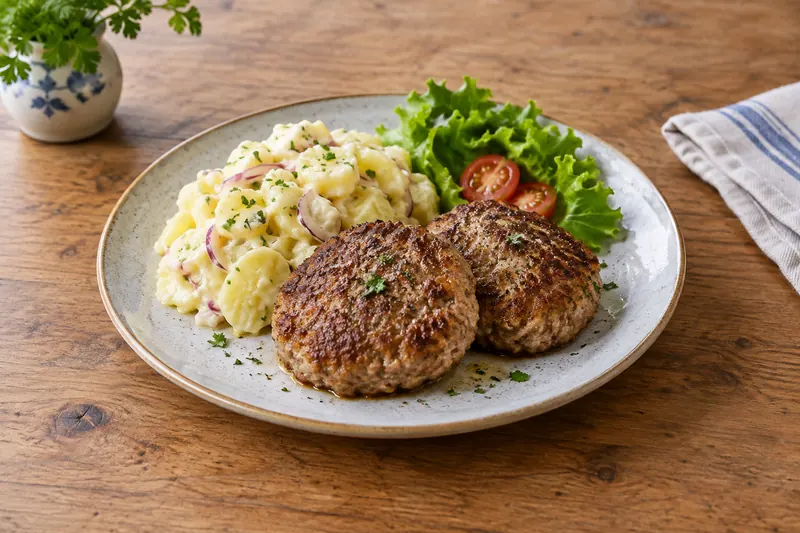 Frikadellen🇩🇪 German recipes · Dinner · 40 min
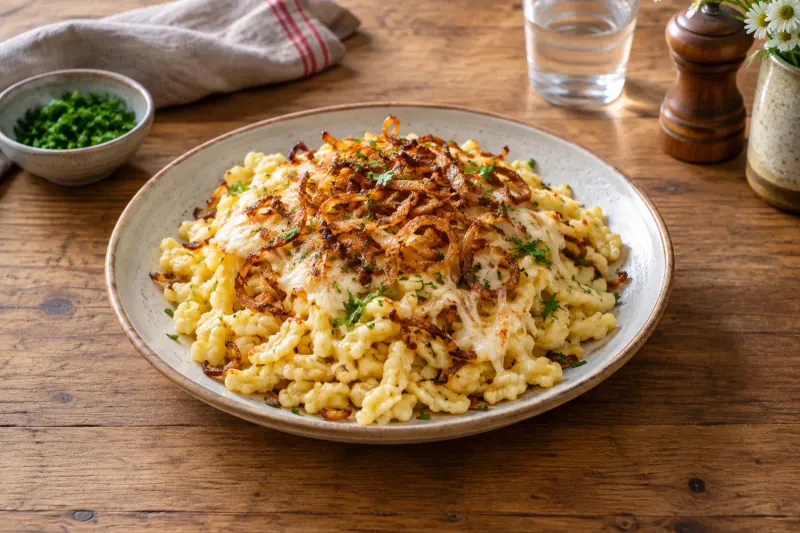 Spätzle🇩🇪 German recipes · Side dish · 50 min
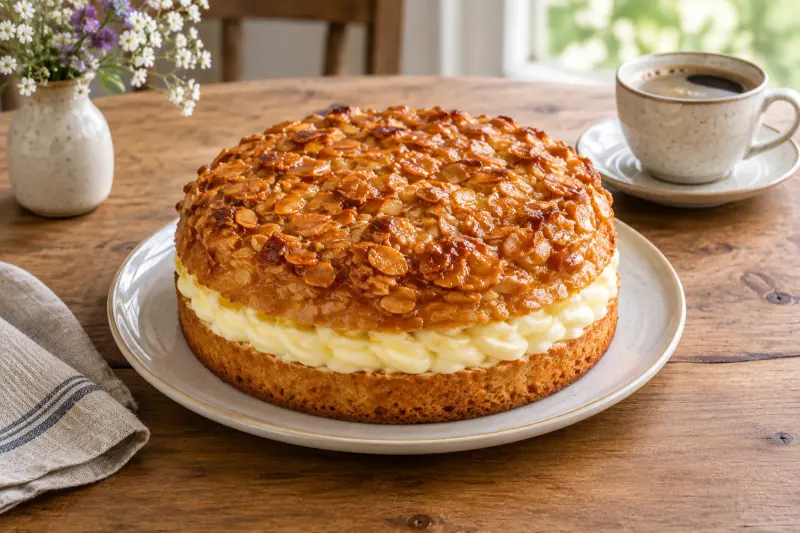 Bienenstich🇩🇪 German recipes · Dessert · 4 h
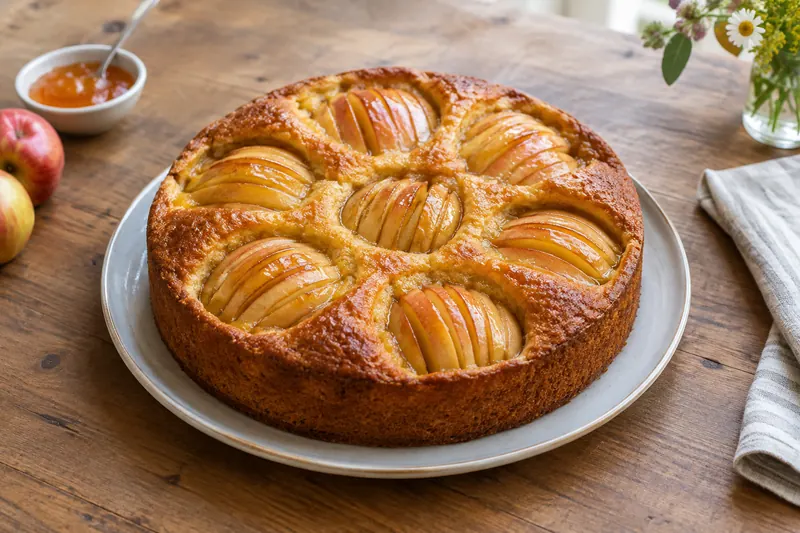 Versunkener Apfelkuchen🇩🇪 German recipes · Dessert · 2 h 40 min
 Berliner🇩🇪 German recipes · Snack · 3 h 15 min
 Glühwein🇩🇪 German recipes · Drink · 30 min
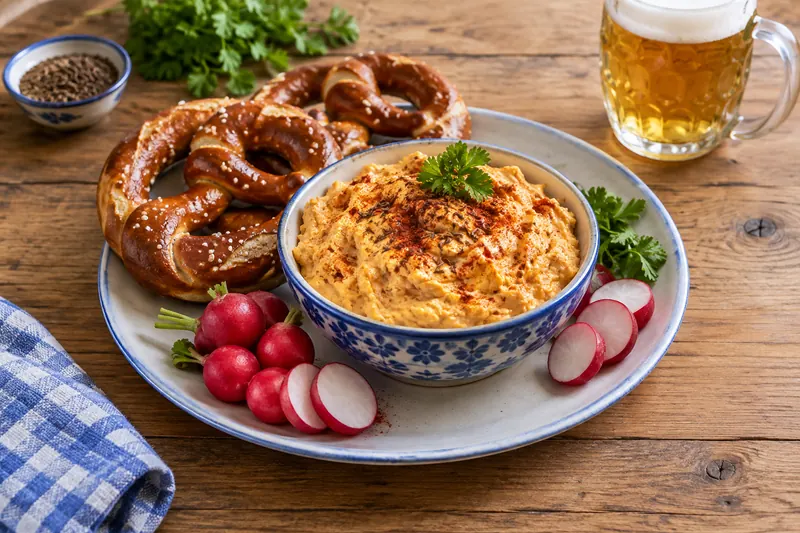 Obatzda🇩🇪 German recipes · Snack · 1 h 45 min
 Radler🇩🇪 German recipes · Drink · 2 min
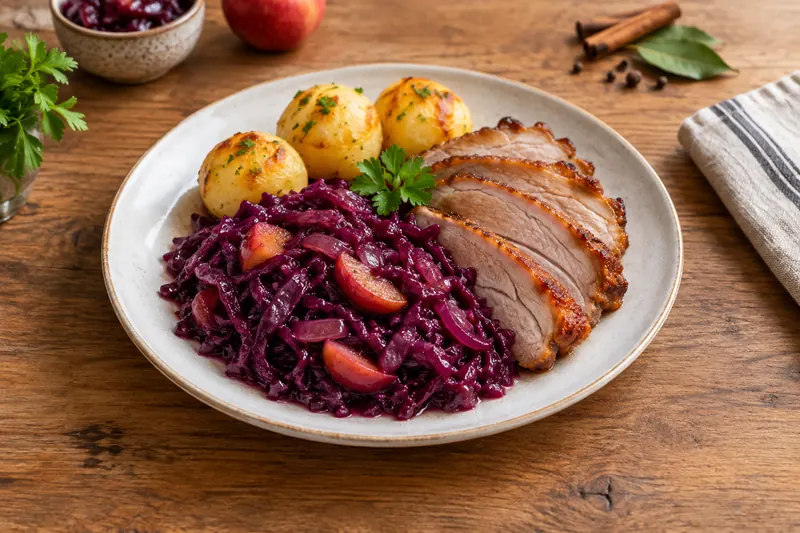 Rotkohl🇩🇪 German recipes · Side dish · 2 h 5 min
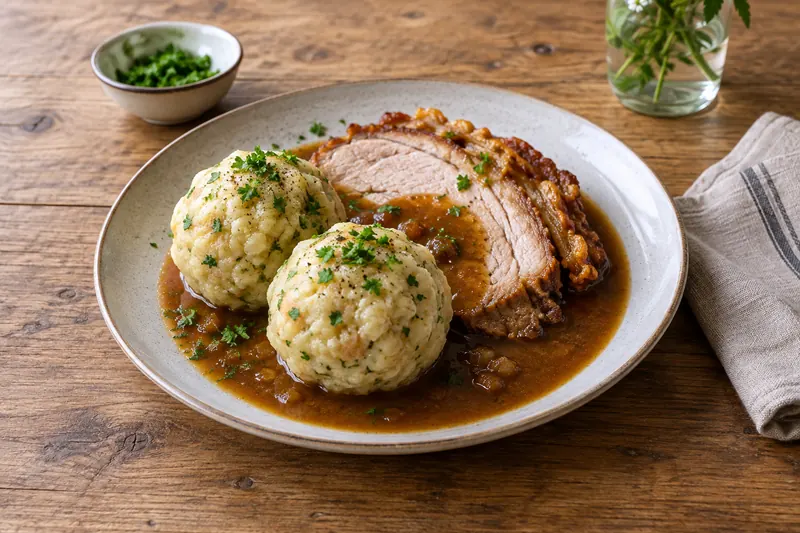 Semmelknödel🇩🇪 German recipes · Side dish · 1 h
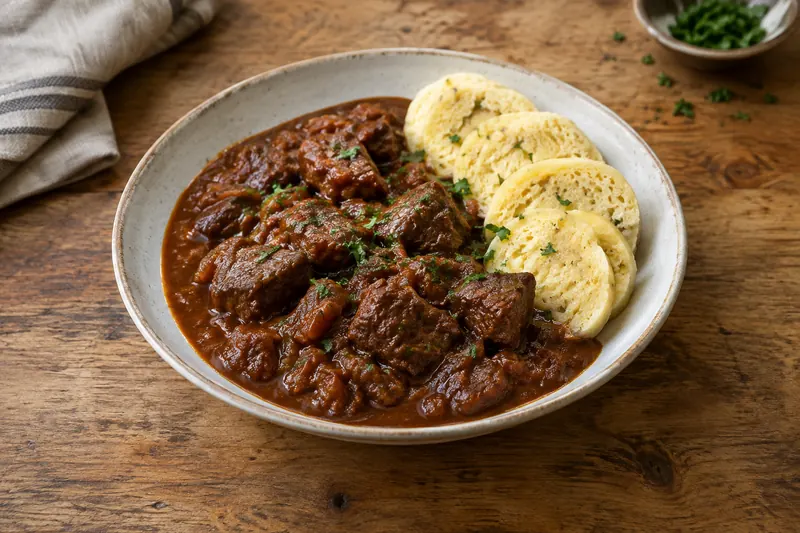 Gulasch🇩🇪 German recipes · Dinner · 3 h 45 min
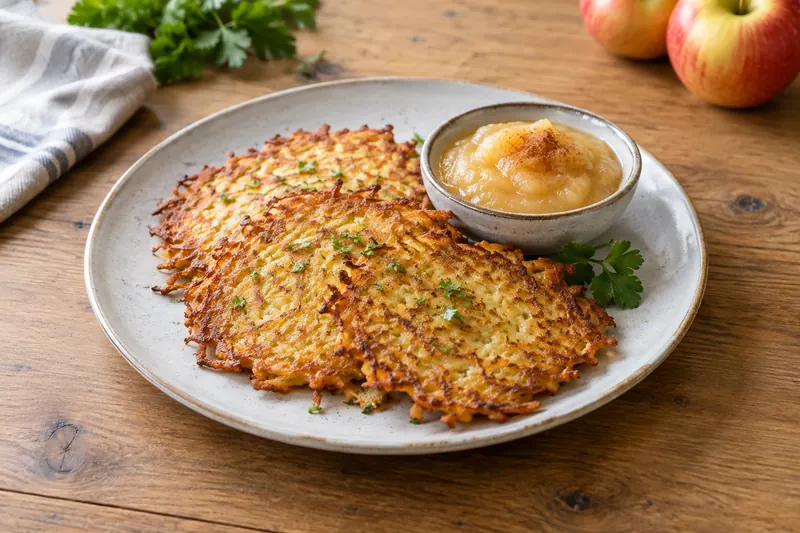 Kartoffelpuffer🇩🇪 German recipes · Lunch · 45 min
 Kartoffelsuppe🇩🇪 German recipes · Lunch · 1 h
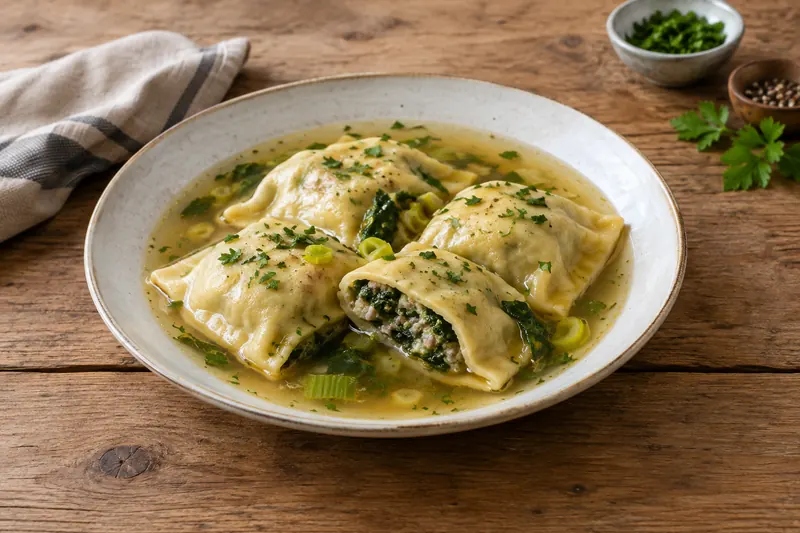 Maultaschen🇩🇪 German recipes · Dinner · 1 h 30 min
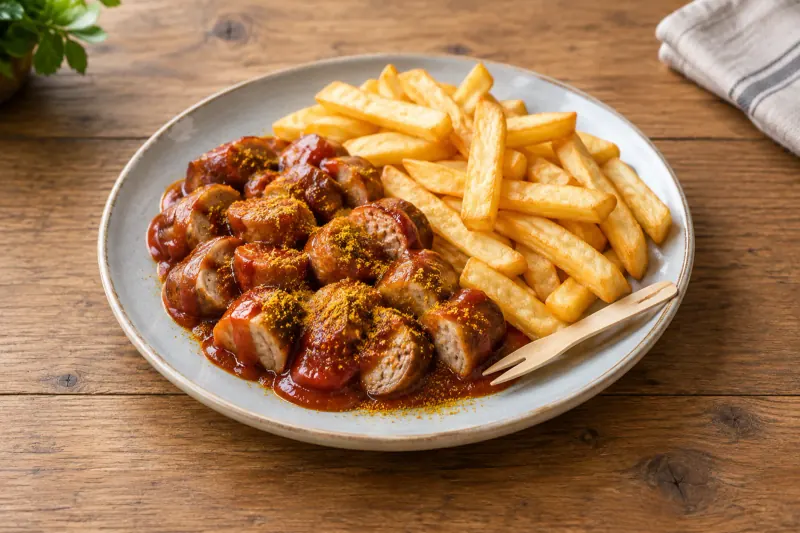 Currywurst🇩🇪 German recipes · Snack · 30 min
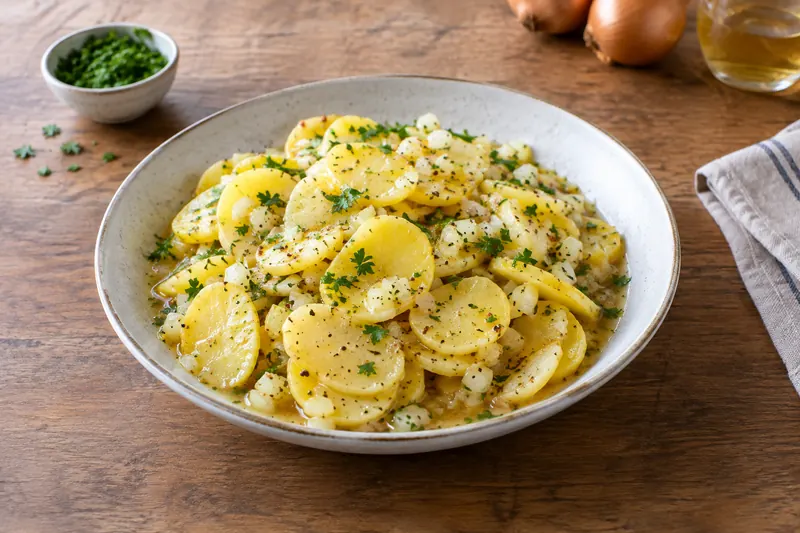 Kartoffelsalat🇩🇪 German recipes · Side dish · 1 h 15 min
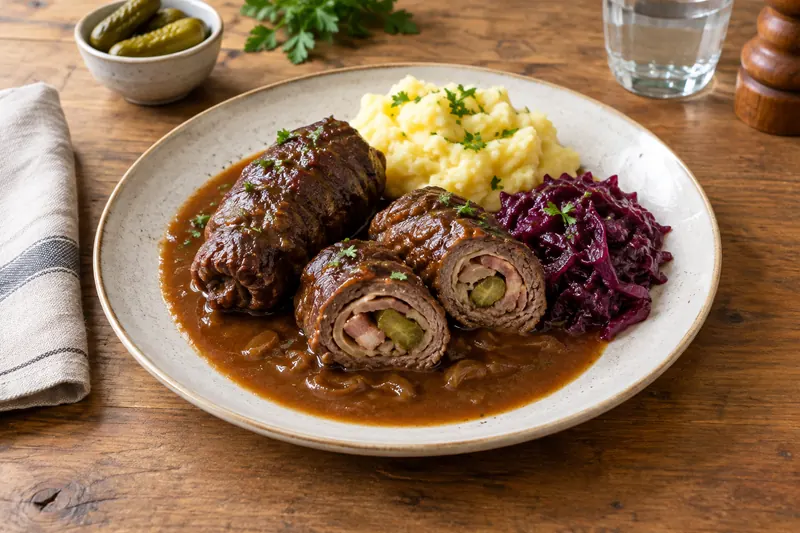 Rouladen🇩🇪 German recipes · Dinner · 2 h 35 min
What makes German home cooking different
German everyday cooking is practical and strongly regional. Minced pork and beef, potatoes, onions, mustard, butter and bread do most of the work, and yesterday's bread is rarely wasted: frikadellen are bound with a stale roll soaked in water and squeezed out, which keeps the flat patties tender.
Many classics belong to a region. Spätzle are Swabian, egg noodles made from a batter beaten until it blisters. Flammkuchen comes from Alsace and the German lands along the Upper Rhine: a yeast-free dough rolled cracker-thin, spread with crème fraîche, scattered with raw onion and bacon and baked for ten minutes at the oven's maximum.
Even the names shift from place to place. The jam doughnuts called berliner in most of Germany are Krapfen in the south and Pfannkuchen in Berlin itself, and frikadellen become Buletten in Berlin.
German baking and Kaffee und Kuchen
Afternoon coffee and cake, Kaffee und Kuchen, is a weekend fixture in many German homes, and a lot of German cake is made from yeast dough rather than sponge. Bienenstich is one: a soft yeasted base under a crunchy layer of almonds, honey and butter, split and filled with vanilla cream.
Berliner are yeast doughnuts too, fried with the pan covered for the first minute, which helps them puff and leaves the pale ring round the middle, then rolled in sugar and filled with raspberry jam. They are eaten across Germany at New Year and Carnival.
Brezeln are the savoury side of the bakery: a firm yeast dough rolled into a rope that is thick in the middle and crossed into the familiar knot. A quick dip in an alkaline bath before baking is what turns them from bread into pretzels.
Planning a German meal or bake day
Frikadellen are the most flexible dish here: warm from the pan for dinner, or cold the next day in a bread roll, the way they turn up at German picnics. Spätzle go beside anything with a sauce, or become a main course layered with grated emmental and fried onion as Käsespätzle.
Plan baking around rising times. Berliner and bienenstich both take several hours with their rises and cooling, so start them in the morning. Apfelstrudel needs no yeast, just a rested dough, a table covered with a floured cloth and patience while you stretch it to about a metre across. Brezeln are best eaten within hours of baking.
Frequently asked questions
- What are German pretzels dipped in before baking?
- German bakeries dip brezeln briefly in a lye solution before baking. The alkali makes the crust brown deeply in the oven, giving the dark mahogany colour, the shine and the slightly bitter bite. At home, bicarbonate of soda baked for an hour at 120°C turns into sodium carbonate, which comes close; wear gloves for the dip and keep it away from aluminium.
- Is apfelstrudel German or Austrian?
- Apfelstrudel is Austrian by origin and closely linked with Vienna, but it is baked and loved all over Germany too. The method is the same in both countries: a simple dough stretched by hand until you can nearly see through it, brushed with butter, scattered with toasted breadcrumbs and filled with apples, raisins and cinnamon. It is served warm with vanilla sauce or whipped cream.
- How do you cut bienenstich without crushing it?
- Cut the cake into squares before you fill it. Once it has cooled, slice each square through horizontally, lift off the almond top, spread the vanilla cream over the base and put the top back on. The caramelised almond layer shatters if you try to cut it once it sits on soft cream, and the filling squeezes out of the sides.
- How do you make spätzle without a spätzle press?
- Spread some batter on a damp chopping board and scrape thin strips off the edge with a palette knife straight into boiling salted water, which is the traditional Swabian way. A colander with large holes also works: push the batter through with a spatula. The shapes are meant to be irregular, and the noodles are done about a minute after they float.