
Brazilian recipes
The everyday Brazilian lunch starts with rice and beans, and so do these Brazilian recipes, which move out from there to the dishes of weekend lunches and birthday parties. Each one explains the steps that matter, such as frying the rice in garlic before the water goes in, or searing okra on its own so it never turns slippery.
Cook arroz e feijão as the everyday base, feijoada when there is time for a long lunch, and churrasco when the fire is lit. For a party, coxinha is the savoury snack and brigadeiro the birthday sweet, rolled by hand and coated in chocolate sprinkles. Scale the servings to your guests and add what you still need to a shared shopping list.
14 recipes
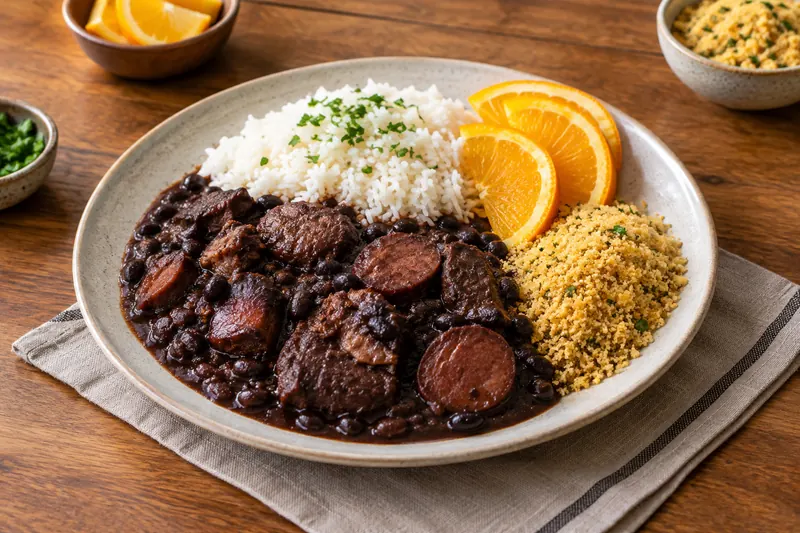 Feijoada🇧🇷 Brazilian recipes · Dinner · 11 h
 Coxinha🇧🇷 Brazilian recipes · Snack · 1 h 25 min
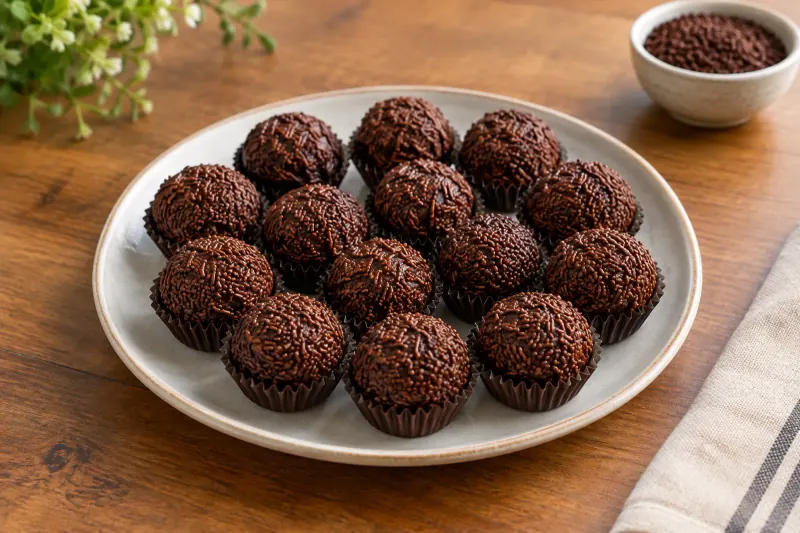 Brigadeiro🇧🇷 Brazilian recipes · Dessert · 1 h 30 min
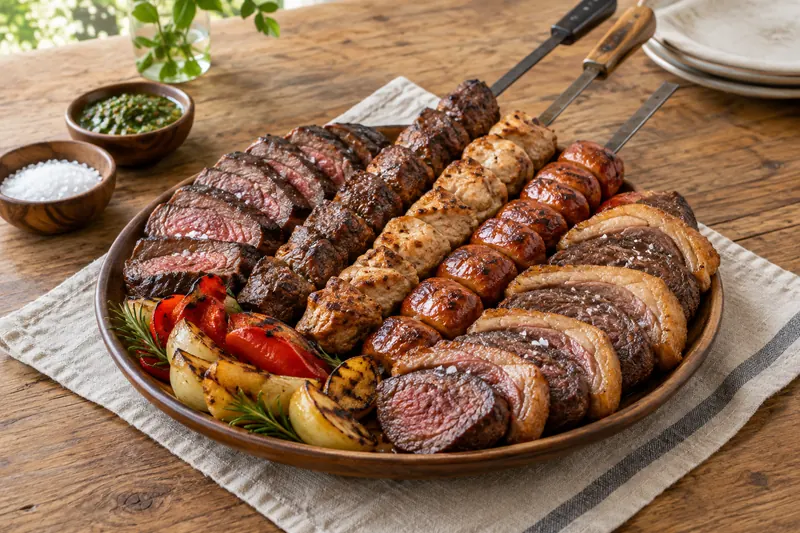 Churrasco🇧🇷 Brazilian recipes · Dinner · 3 h
 Bolo de Cenoura🇧🇷 Brazilian recipes · Dessert · 1 h 25 min
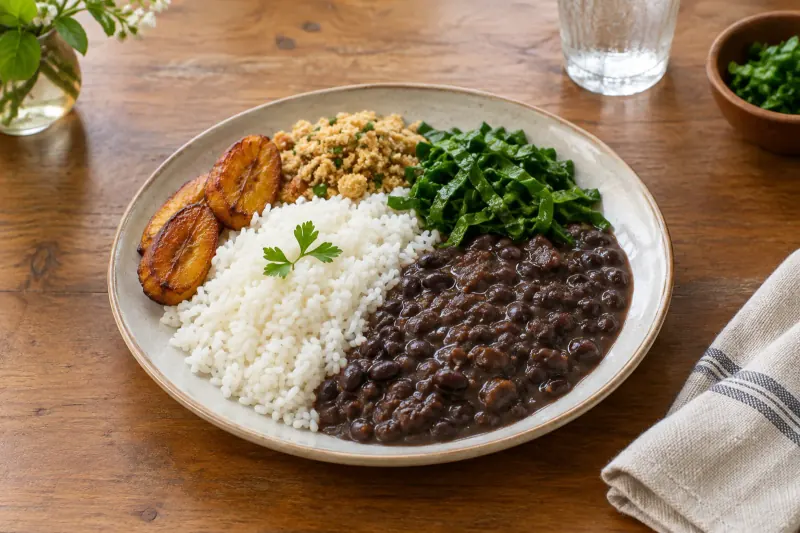 Arroz e Feijão🇧🇷 Brazilian recipes · Dinner · 9 h 50 min
 Camarão na Moranga🇧🇷 Brazilian recipes · Dinner · 2 h 10 min
 Beijinho🇧🇷 Brazilian recipes · Dessert · 1 h 45 min
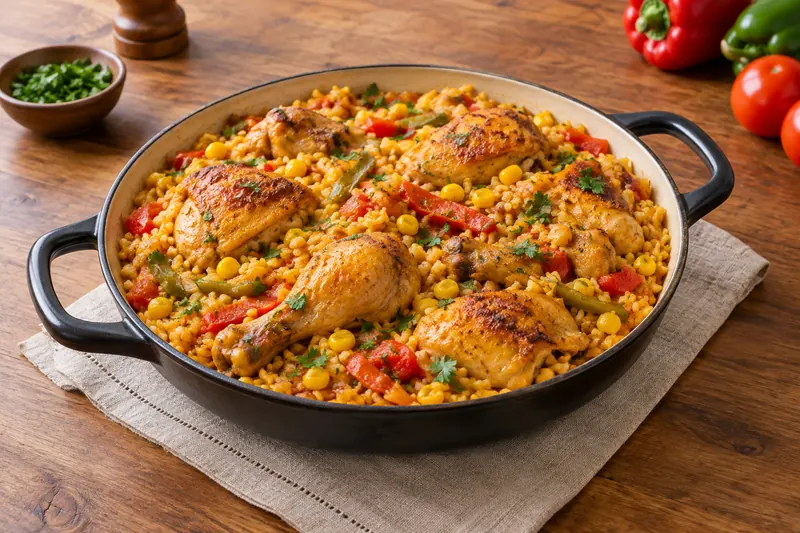 Galinhada🇧🇷 Brazilian recipes · Dinner · 1 h 30 min
 Misto Quente🇧🇷 Brazilian recipes · Breakfast · 13 min
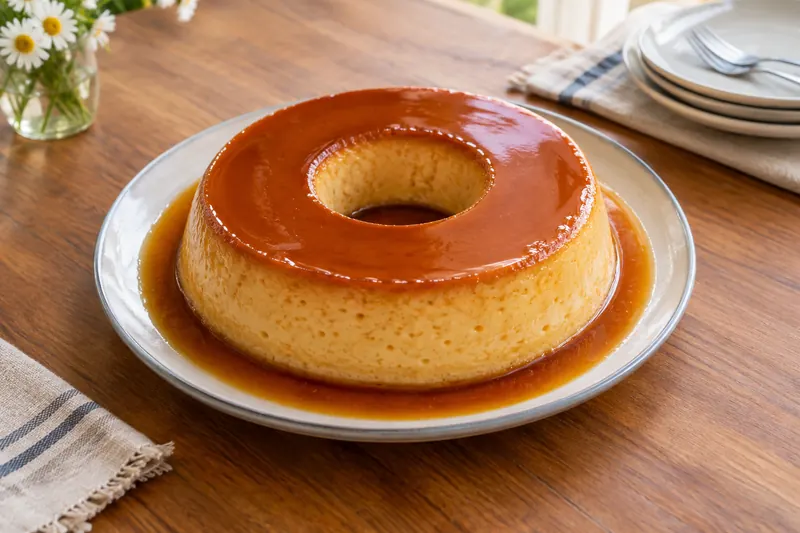 Pudim de Leite🇧🇷 Brazilian recipes · Dessert · 7 h 45 min
 Quindim🇧🇷 Brazilian recipes · Dessert · 3 h 25 min
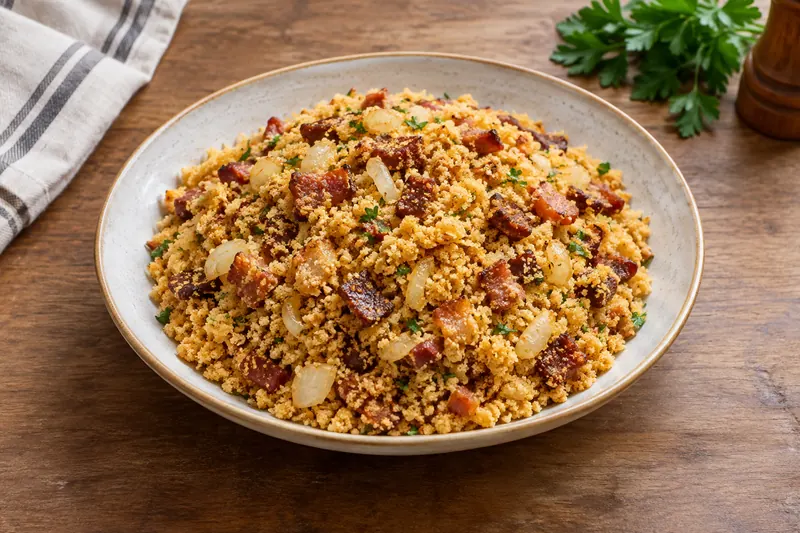 Farofa🇧🇷 Brazilian recipes · Side dish · 32 min
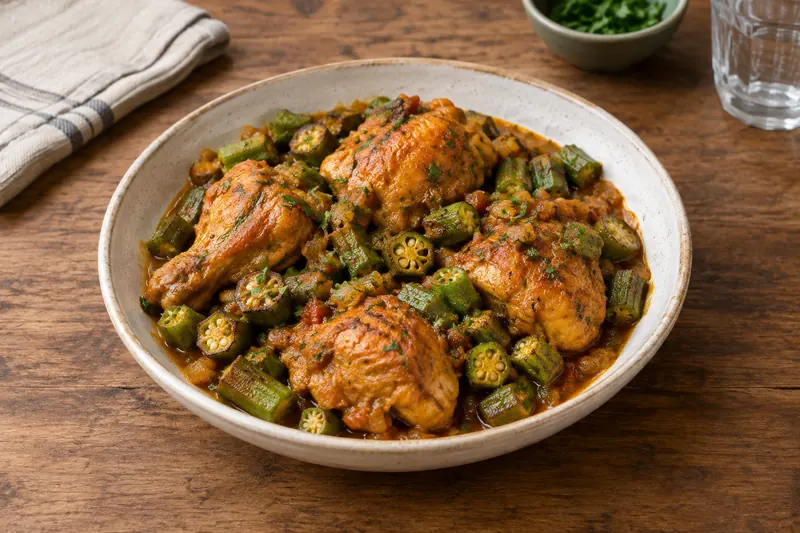 Frango com Quiabo🇧🇷 Brazilian recipes · Dinner · 1 h 25 min
What Brazilian home cooking is built on
Rice and beans are the backbone of the Brazilian table, eaten daily in homes across the country and dressed up rather than replaced on special days. Arroz e feijão is the everyday version: rice toasted in garlic and oil, and black beans simmered soft and thickened by mashing a ladleful back into the pot, with no flour at all.
Feijoada is the weekend version, black beans cooked for hours with smoked ribs, pork shoulder and sausage until the broth turns dark and thick. It is served over rice with quick-fried greens, orange slices to cut the fat, and farofa, cassava flour toasted in fat until golden and sandy.
Regional cooking runs deep too. Frango com quiabo, chicken braised with okra and finished with a splash of vinegar, comes from Minas Gerais. Churrasco, meat grilled on long skewers over coals and seasoned with nothing but coarse salt, belongs to the gaúcho south.
Cassava flour, condensed milk and other staples
Cassava flour, farinha de mandioca, is the one ingredient you may need to look for; Latin American shops and online grocers sell it. It goes into farofa and onto the plate beside feijoada and churrasco. Cassava contains no gluten, so the farofa on this page is gluten-free.
Dried black beans need at least eight hours of soaking, so arroz e feijão and feijoada both start the night before, though the hands-on work is short. Brazilians cook beans in quantity, and they are better on the second and third day.
A tin of sweetened condensed milk is the start of most Brazilian party sweets. Brigadeiro cooks it down with cocoa and butter, beijinho with desiccated coconut, and each tin makes a tray of small balls to roll once the mixture has cooled.
Planning a Brazilian lunch or party
For a crowd, churrasco works as a rolling meal: the outside of each skewer is sliced off as it cooks, and the skewer goes back on the fire for the next layer. Keep farofa, rice and a tomato and onion vinaigrette on the table throughout.
For a birthday, make coxinha as the savoury snack and roll brigadeiro and beijinho a few hours ahead so they can set in their paper cases. Bake bolo de cenoura in a tray and cut it into squares once the glaze has set, so it can go out alongside the sweets.
Frequently asked questions
- What is the national dish of Brazil?
- Feijoada is widely called Brazil's national dish. It is a stew of black beans and pork, simmered for hours until the beans break down into a dark broth, and it is the centre of a long weekend lunch. Day to day, though, the dish most Brazilians actually eat is plain rice and beans, arroz e feijão.
- How do you know when brigadeiro is ready?
- Brigadeiro is ready when you drag a spatula across the base of the pan and the mixture parts to show the bare pan for a full second before closing, and the whole mass follows the spatula instead of flowing. That usually takes 10 to 12 minutes over medium-low heat. Undercooked, it slumps and cannot be rolled; a minute too long and it turns chewy and grainy.
- What is coxinha?
- Coxinha is a Brazilian fried snack: shredded chicken and a little cream cheese wrapped in a soft dough, shaped like a small drumstick, crumbed and fried until deep golden. The name means little thigh. What makes it taste of chicken all the way through is the dough, which is cooked in the broth left from poaching the chicken.
- What is bolo de cenoura?
- Bolo de cenoura is Brazil's everyday carrot sponge, the cake served with afternoon coffee. Raw carrots are blended with eggs and oil until completely smooth, which gives a fine, fluffy, bright orange crumb with no visible shreds. It has no spices and no nuts, and a glossy chocolate glaze is poured over while the cake is still warm.