
French recipes
The French recipes here are classics of the bistro and the bakery, written for a home kitchen with exact amounts and the reason behind each step. French cooking has a name for technique, yet most of its best-known dishes are patient home cooking: beef left to simmer in wine, a salad built from the market, a custard set slowly in a low oven.
Cook boeuf bourguignon when there is an afternoon to spare and salade niçoise when it is warm, bake croissants for a slow weekend breakfast, and finish a celebration with crème brûlée or éclairs. Servings scale to the number at the table, and anything you are missing goes onto a shared shopping list.
28 recipes
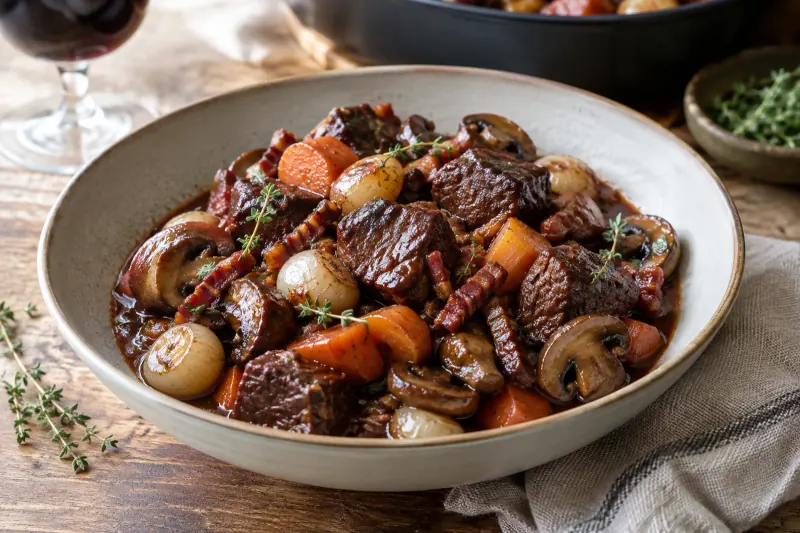 Boeuf Bourguignon🇫🇷 French recipes · Dinner · 4 h 10 min
 Croissants🇫🇷 French recipes · Breakfast · 13 h
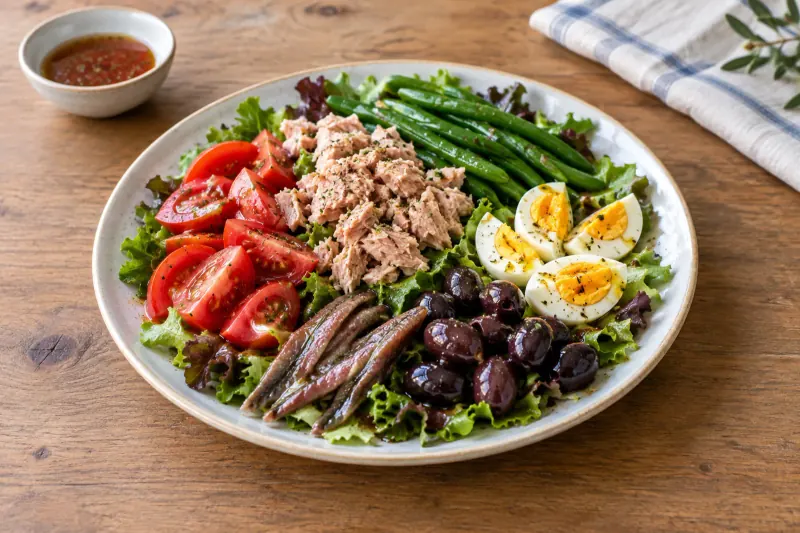 Salade Niçoise🇫🇷 French recipes · Lunch · 45 min
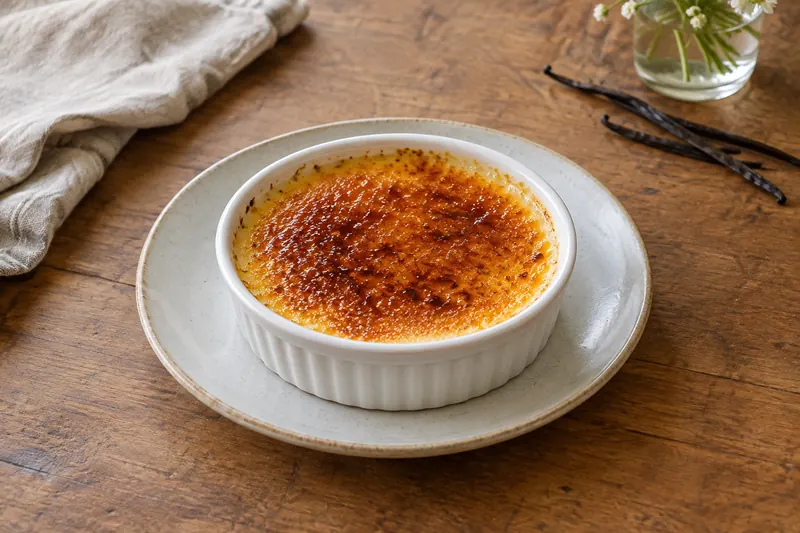 Crème Brûlée🇫🇷 French recipes · Dessert · 5 h
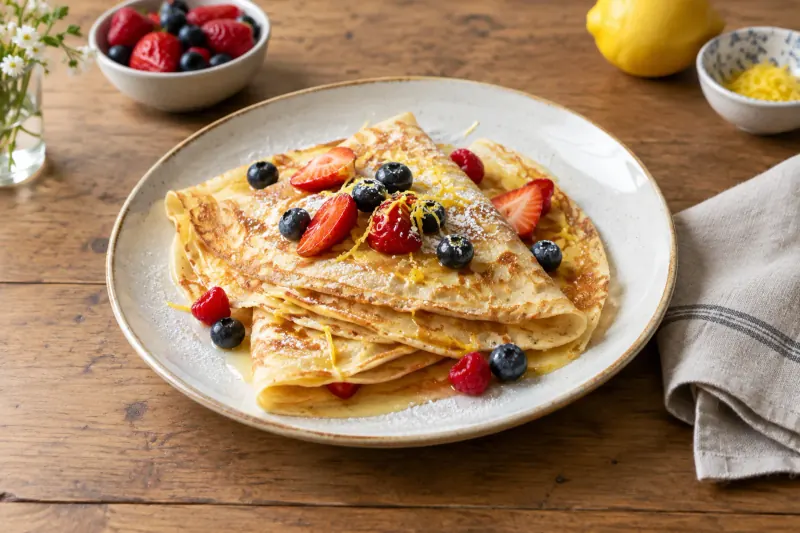 Crêpes🇫🇷 French recipes · Breakfast · 1 h
 Éclairs🇫🇷 French recipes · Dessert · 3 h
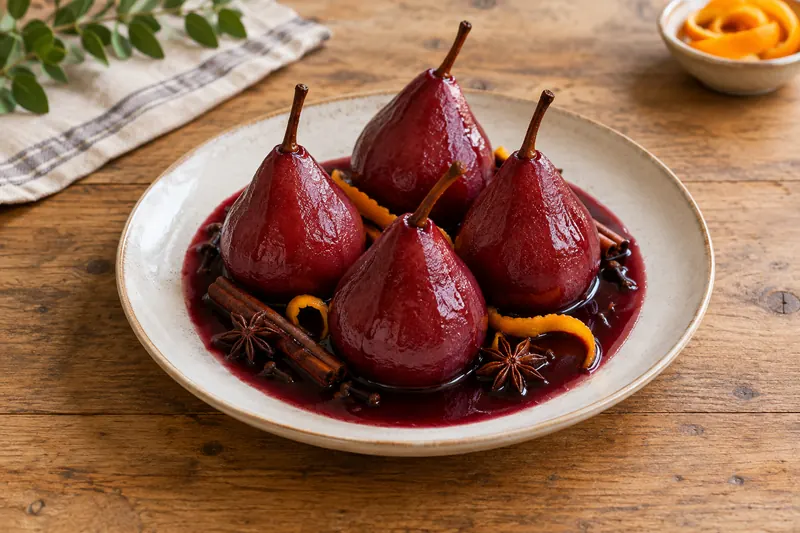 Poached Pears in Red Wine🇫🇷 French recipes · Dessert · 1 h 15 min
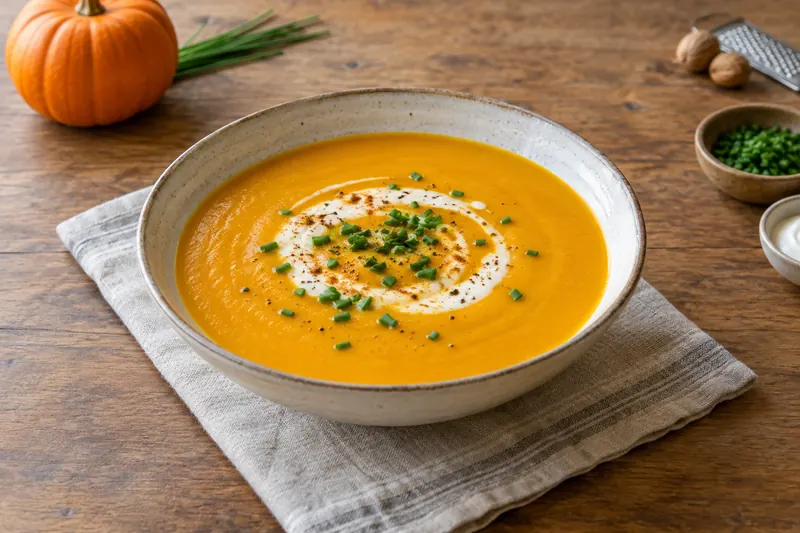 Pumpkin Soup🇫🇷 French recipes · Lunch · 1 h 5 min
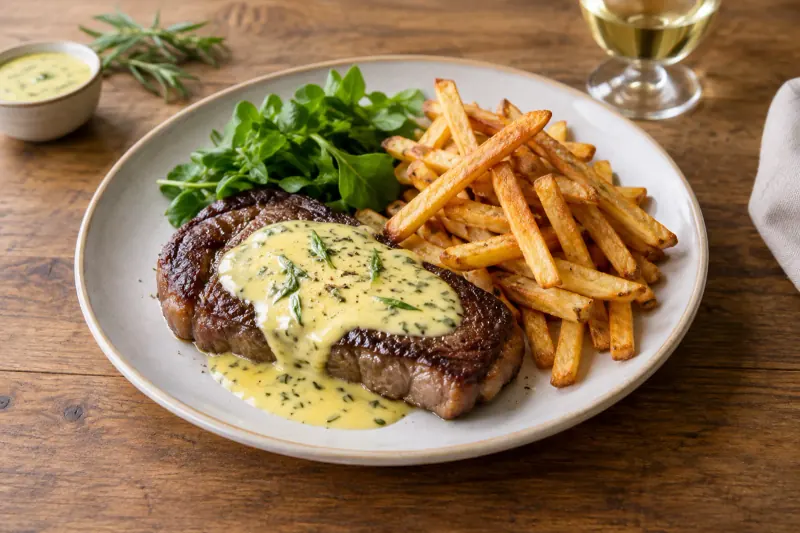 Béarnaise Sauce🇫🇷 French recipes · Side dish · 25 min
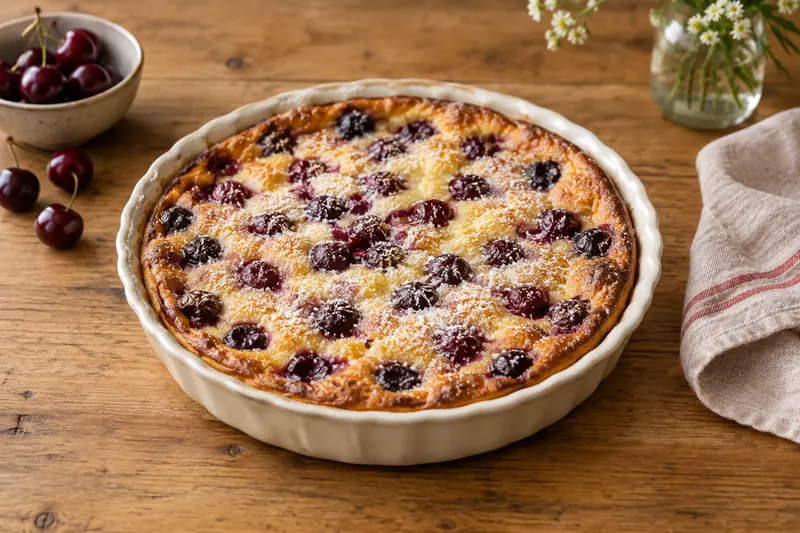 Clafoutis🇫🇷 French recipes · Dessert · 1 h 10 min
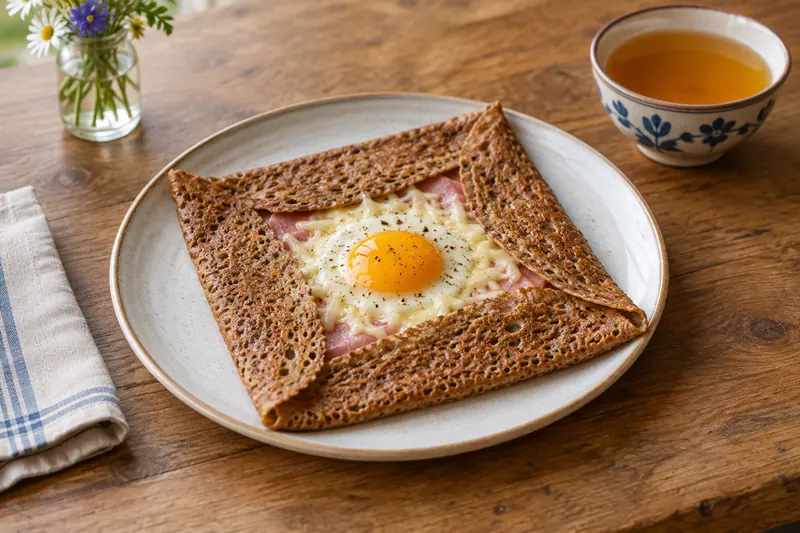 Galette Bretonne🇫🇷 French recipes · Lunch · 2 h 30 min
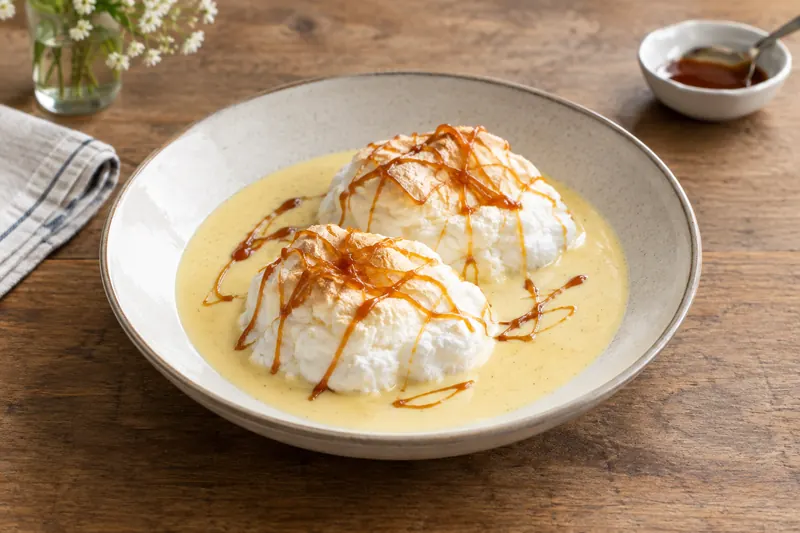 Île Flottante🇫🇷 French recipes · Dessert · 2 h 45 min
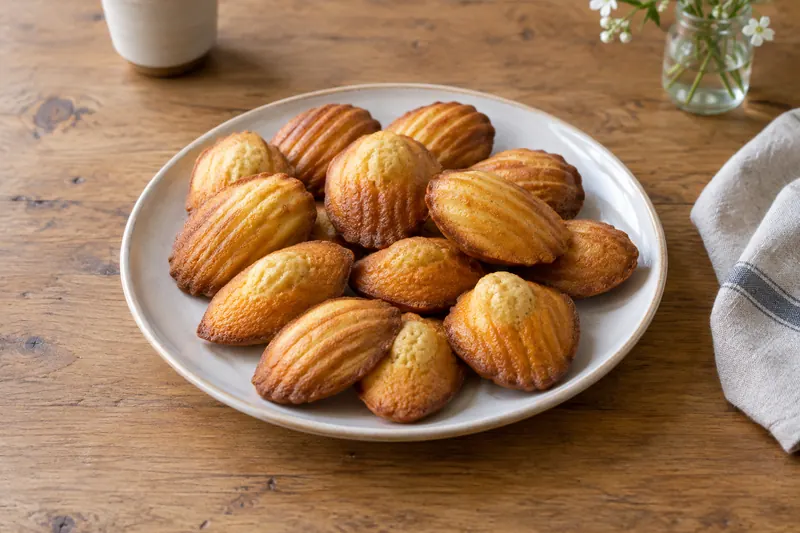 Madeleines🇫🇷 French recipes · Snack · 3 h 45 min
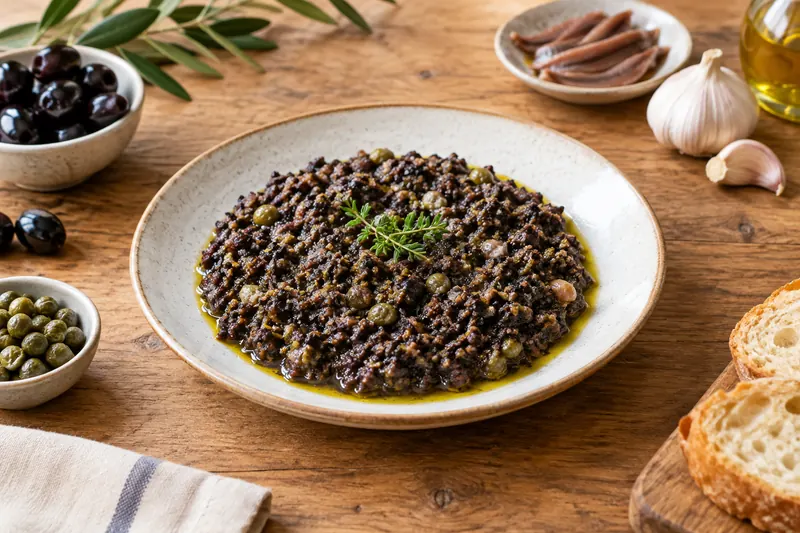 Olive Tapenade🇫🇷 French recipes · Side dish · 10 min
 Pain au Chocolat🇫🇷 French recipes · Breakfast · 17 h 20 min
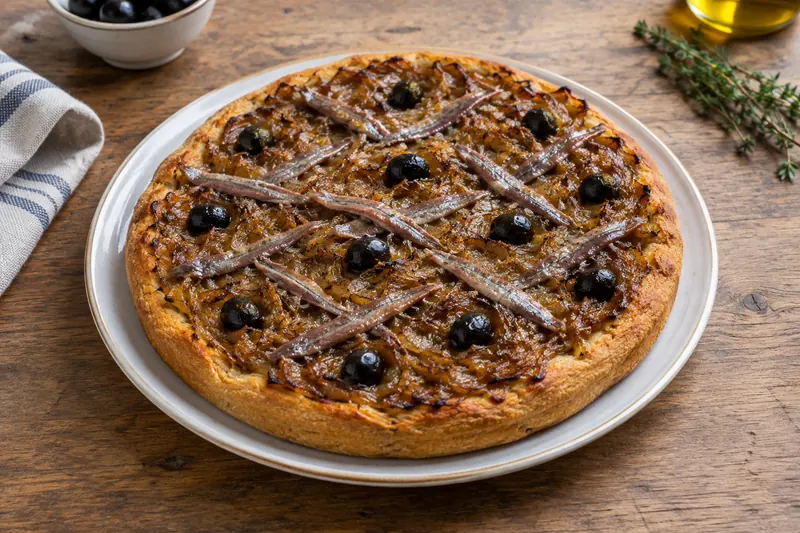 Pissaladière🇫🇷 French recipes · Lunch · 2 h 25 min
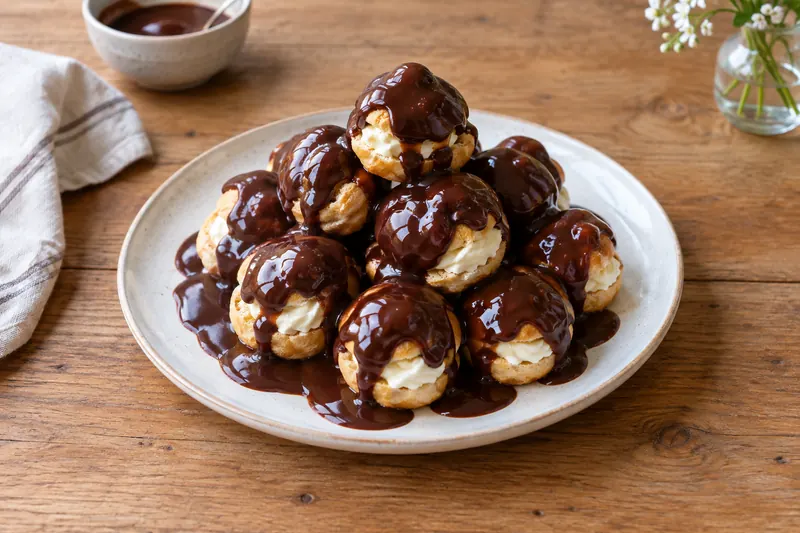 Profiteroles🇫🇷 French recipes · Dessert · 1 h 10 min
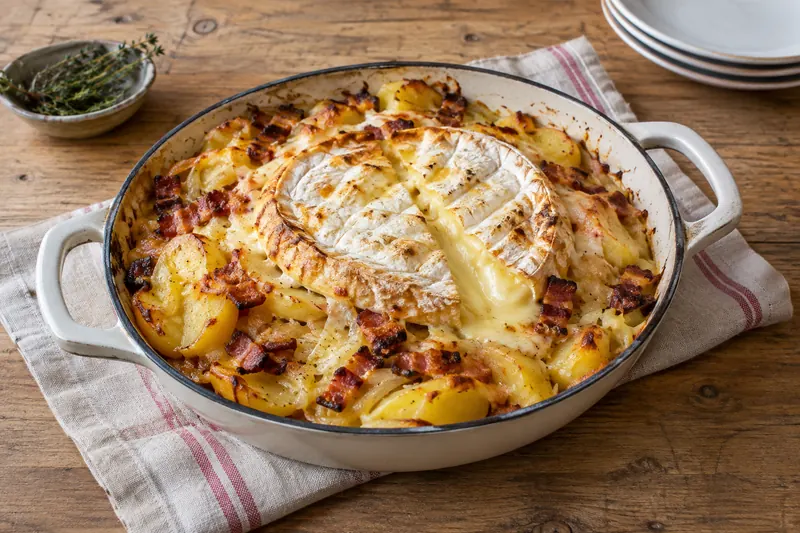 Tartiflette🇫🇷 French recipes · Dinner · 1 h 20 min
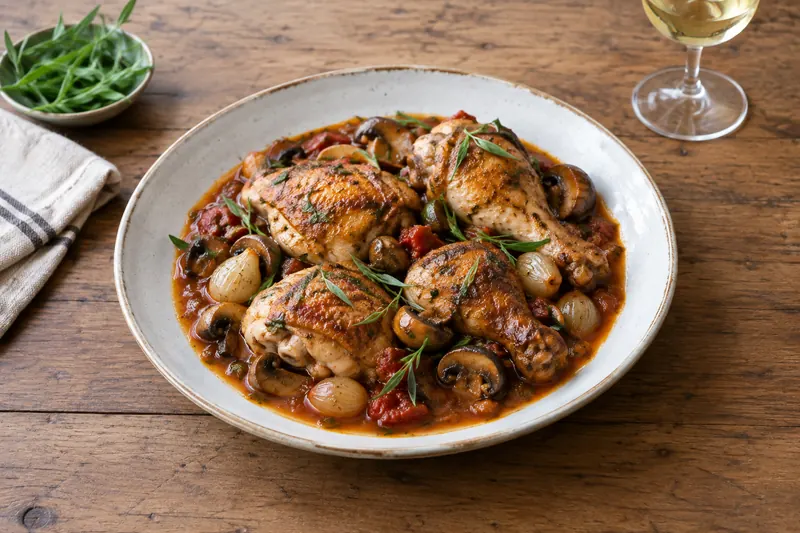 Chicken Chasseur🇫🇷 French recipes · Dinner · 1 h 10 min
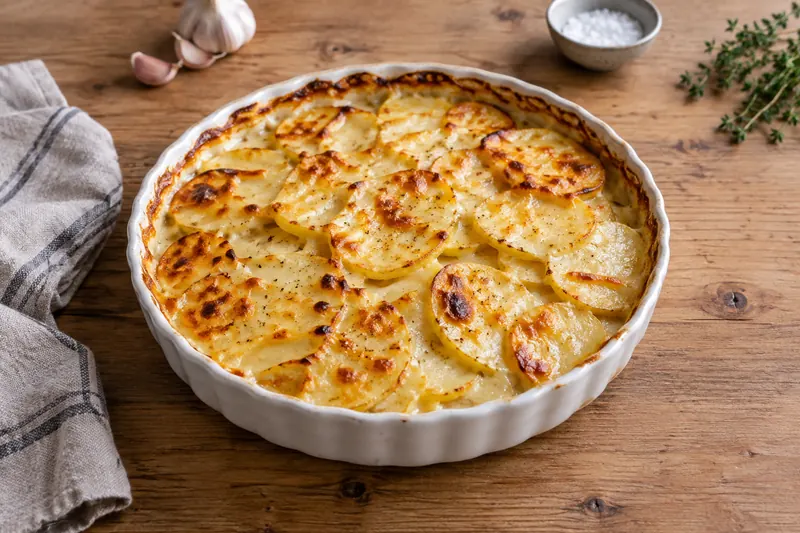 Gratin Dauphinois🇫🇷 French recipes · Side dish · 1 h 50 min
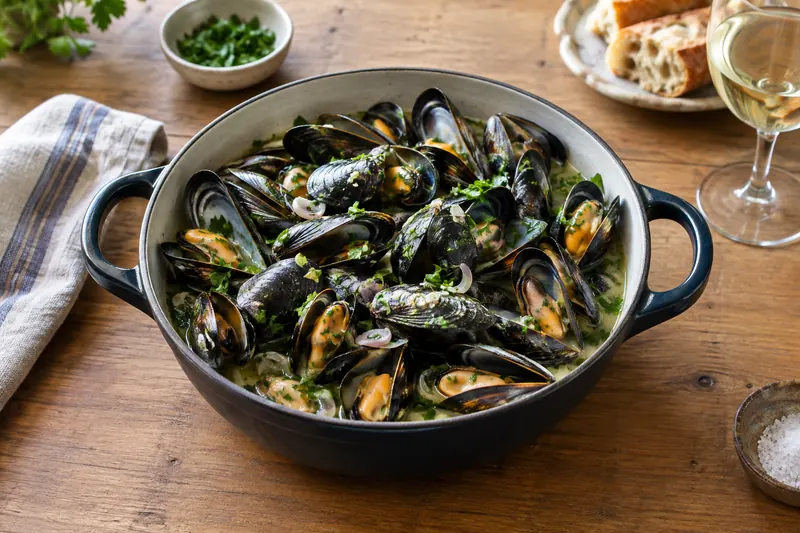 Moules Marinières🇫🇷 French recipes · Dinner · 30 min
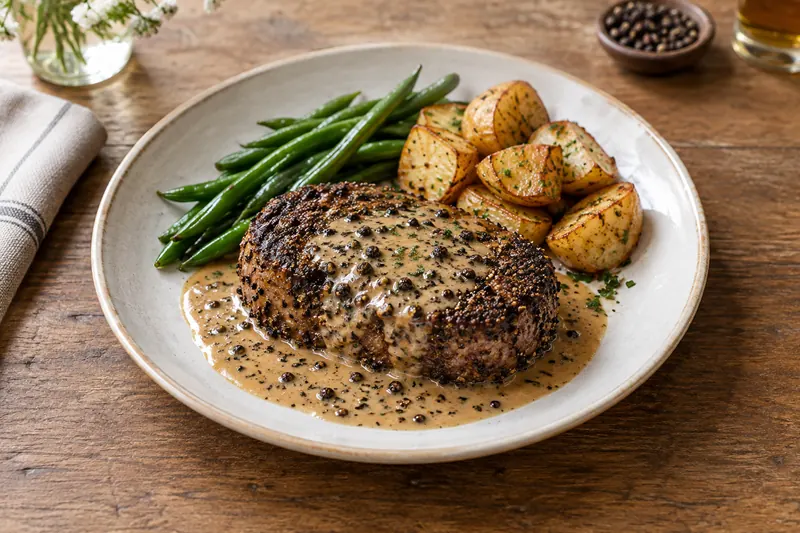 Steak au Poivre🇫🇷 French recipes · Dinner · 25 min
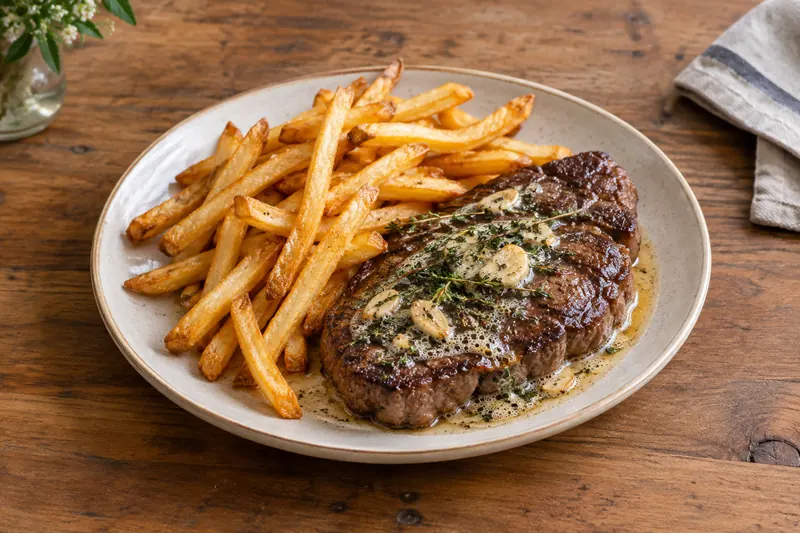 Steak Frites🇫🇷 French recipes · Dinner · 1 h 15 min
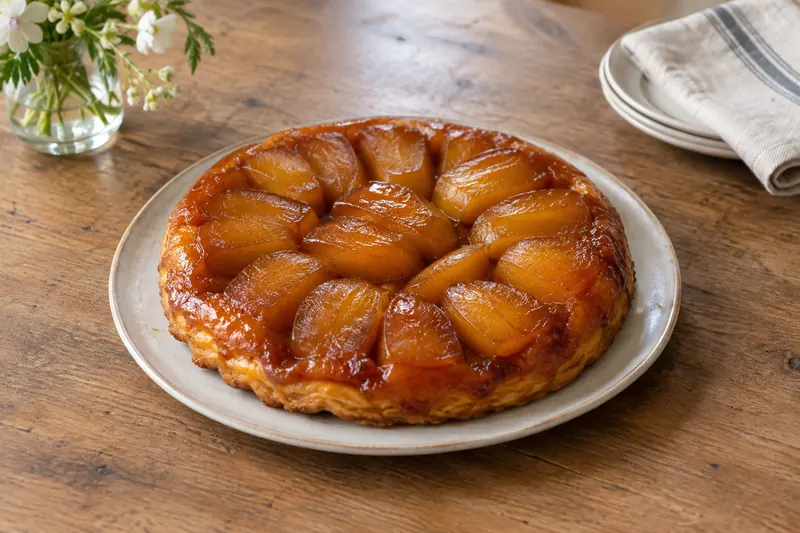 Tarte Tatin🇫🇷 French recipes · Dessert · 1 h 30 min
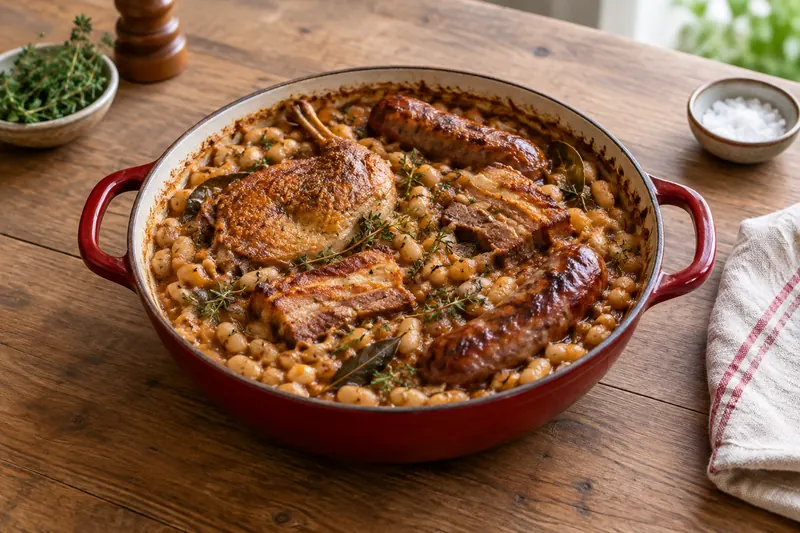 Cassoulet🇫🇷 French recipes · Dinner · 12 h 40 min
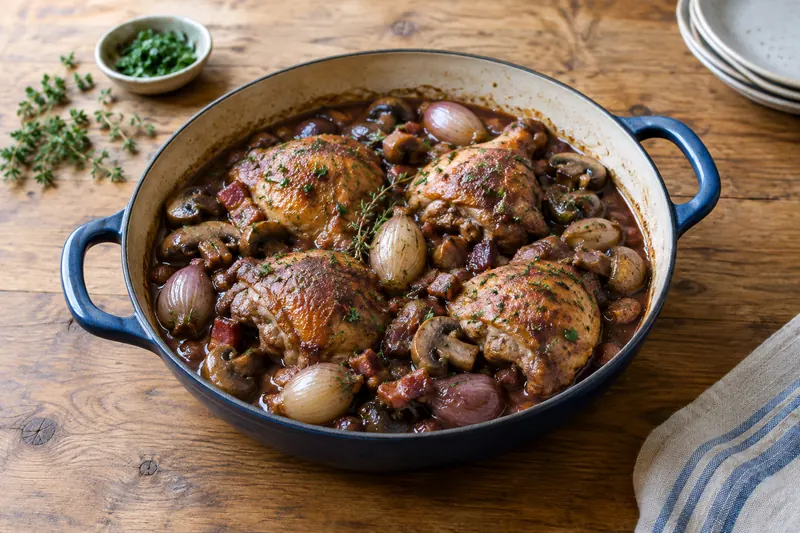 Coq au Vin🇫🇷 French recipes · Dinner · 6 h 10 min
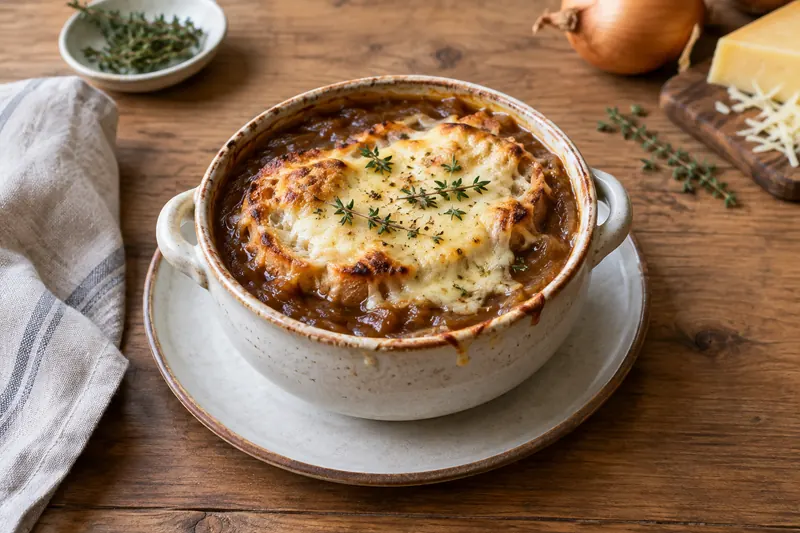 French Onion Soup🇫🇷 French recipes · Lunch · 1 h 45 min
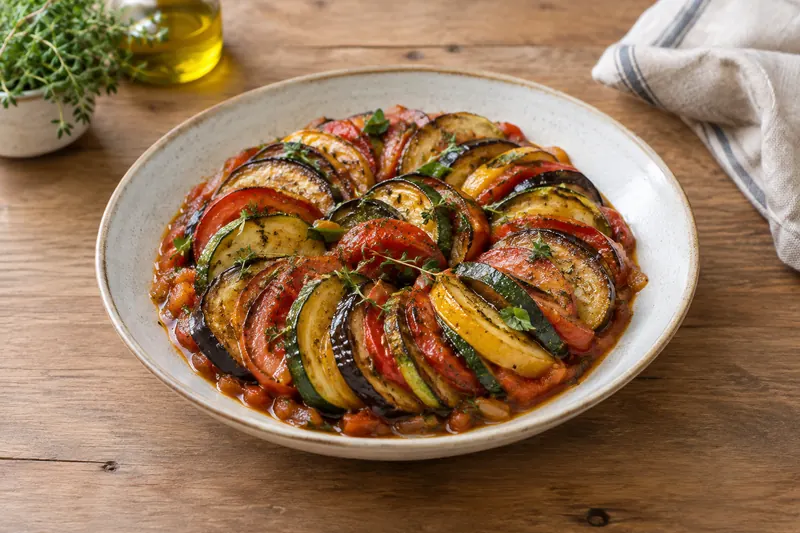 Ratatouille🇫🇷 French recipes · Dinner · 1 h 15 min
What makes French cooking different
French home cooking rests on habits more than rare ingredients: drying and browning meat well before it braises, letting wine bubble hard so it tastes of fruit rather than alcohol, and finishing with fresh herbs. Butter, shallots, tarragon, thyme and good vinegar turn up again and again.
The other habit is cooking parts separately. In boeuf bourguignon the baby onions and mushrooms are browned in butter on their own and folded in at the end. In chicken chasseur the mushrooms are seared first so they do not water down the sauce, and in salade niçoise each element is laid out in its own group rather than tossed.
Three French techniques worth learning
An emulsion: béarnaise sauce is egg yolks whisked over barely simmering water, then warm clarified butter beaten in a little at a time, flavoured with a reduction of vinegar, white wine, shallot and tarragon. Keep it warm, never hot, and it holds.
A baked custard: crème brûlée sets in a water bath in a 140°C oven, which keeps the cream silky instead of scrambled. Clafoutis is a looser cousin, a thick vanilla batter poured over cherries and baked until puffed and just set.
Choux pastry: the dough for éclairs is cooked in a pan until it forms a ball, then beaten with eggs, piped through a star nozzle and baked until hollow. The shells are pierced and dried in the oven so they stay crisp until they are filled.
How to plan a French meal at home
A French meal at home can be one main and a dessert. Boeuf bourguignon is better the next day, which makes it easy for guests, while chicken chasseur is ready in just over an hour and works on a weeknight. Béarnaise is made at the last minute and keeps for half an hour, so start it when the steak goes on.
Choose dessert by the time you have on the day. Crème brûlée needs at least four hours in the fridge, éclairs take an afternoon and are best filled close to serving, and clafoutis goes into the oven as dinner starts and is served warm.
Frequently asked questions
- What do you serve with boeuf bourguignon?
- Boeuf bourguignon is usually served with mashed potato, buttered noodles or plenty of bread, anything that soaks up the red wine sauce. A green salad afterwards balances the richness. Because the flavour deepens overnight, it is worth making a day ahead: cool it completely, keep it in the fridge and reheat it gently on the hob.
- How do you fix béarnaise sauce that has split?
- Start again with a fresh egg yolk. Whisk a spoonful of hot water into it in a clean bowl, then whisk the split sauce in slowly, a little at a time, and it will come back together. Béarnaise splits when the yolks get too hot and scramble or the butter goes in too fast, so keep the bowl warm rather than hot.
- Do you need a blowtorch for crème brûlée?
- A blowtorch is easiest, but a very hot grill works. Sit the well-chilled ramekins in a tray packed with ice, so the custard stays cold, and put them as close to the grill as they will go, watching the whole time. Either way, blot moisture off the custard first and burn the sugar just before serving so the crust stays crisp.
- Should you pit cherries for clafoutis?
- Traditionally, no. In the Limousin, where clafoutis comes from, the cherries go in whole with their stones, which add a faint almond flavour and keep the juice inside the fruit. If you leave them in, warn your guests before they bite; if you are serving young children, stoning the cherries first is the safer choice.
- Are croissants hard to make at home?
- Croissants take time more than skill. The dough rests overnight, then is folded around a slab of cold butter and rolled three times, with a chill between each turn, to build 27 layers. The one rule is to keep everything cold, including the final rise at no more than 26°C, or the butter melts out and the layers merge.