
Fall soup and stew recipes
These fall soup and stew recipes are the slow, warming pots of autumn from across Europe and beyond: beetroot borscht, Hungarian goulash, German kartoffelsuppe and Moroccan harira, alongside bean and meat stews that simmer for an afternoon. Many of them taste better the next day, so one big pot covers more than one meal.
Shchi, the Russian cabbage soup, is soured at the table with smetana, cocido madrileño is served as three courses, and feijoada cooks black beans and pork until the beans collapse into a dark broth. Every recipe gives exact amounts, scales to the number of people eating and sends what you still need to a shared shopping list.
15 recipes
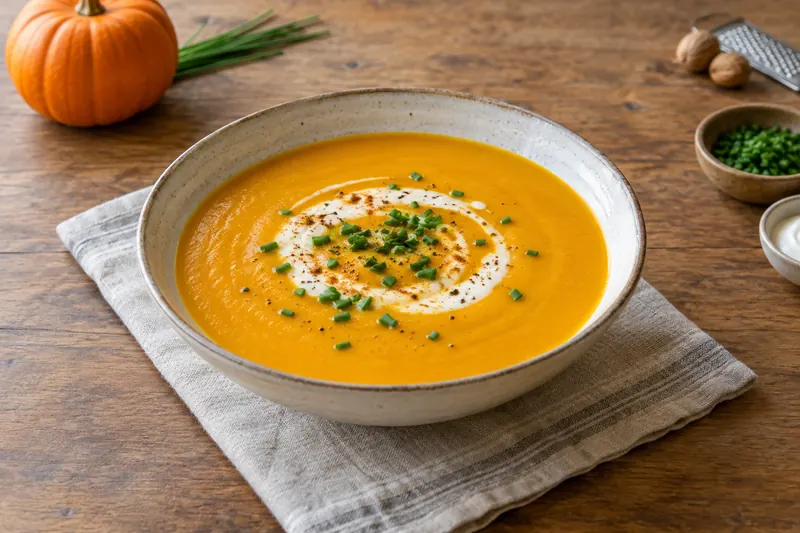 Pumpkin Soup🇫🇷 French recipes · Lunch · 1 h 5 min
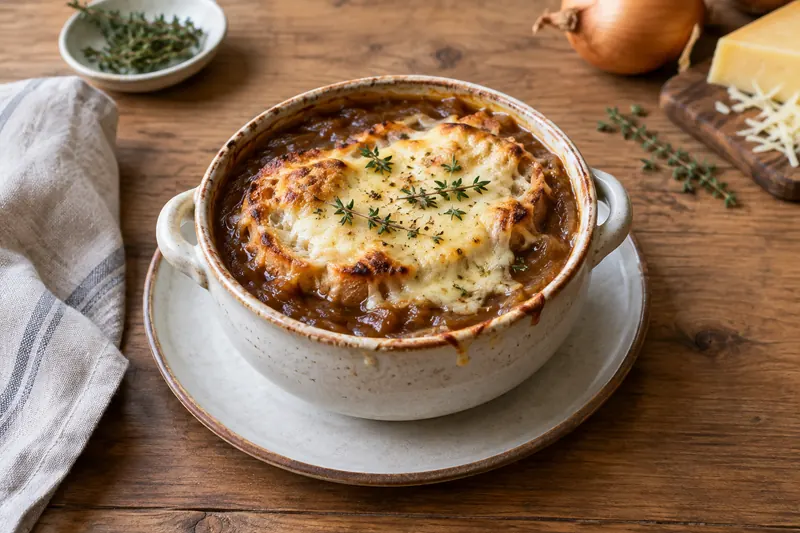 French Onion Soup🇫🇷 French recipes · Lunch · 1 h 45 min
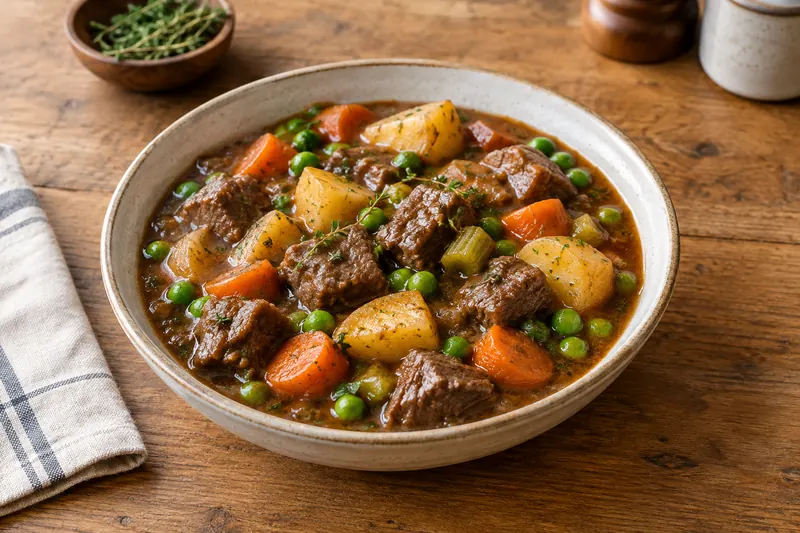 Beef Stew🇺🇸 American recipes · Dinner · 3 h 30 min
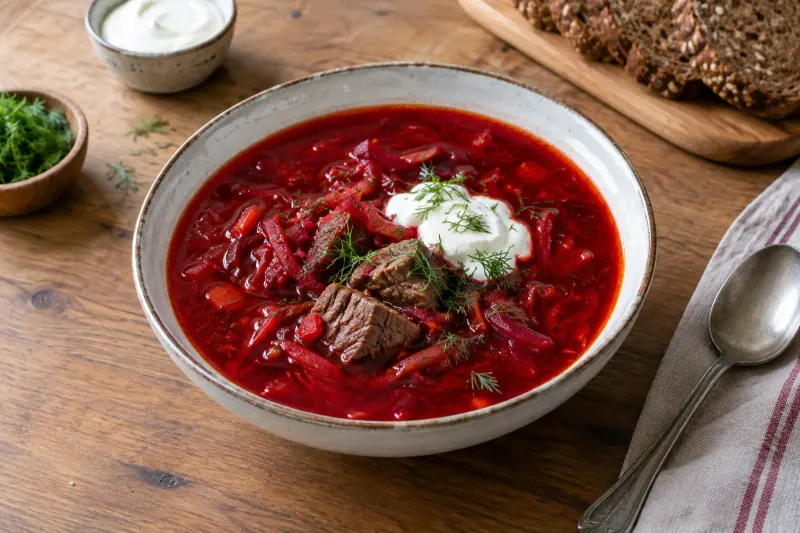 Borscht🌍 Eastern European recipes · Lunch · 2 h 40 min
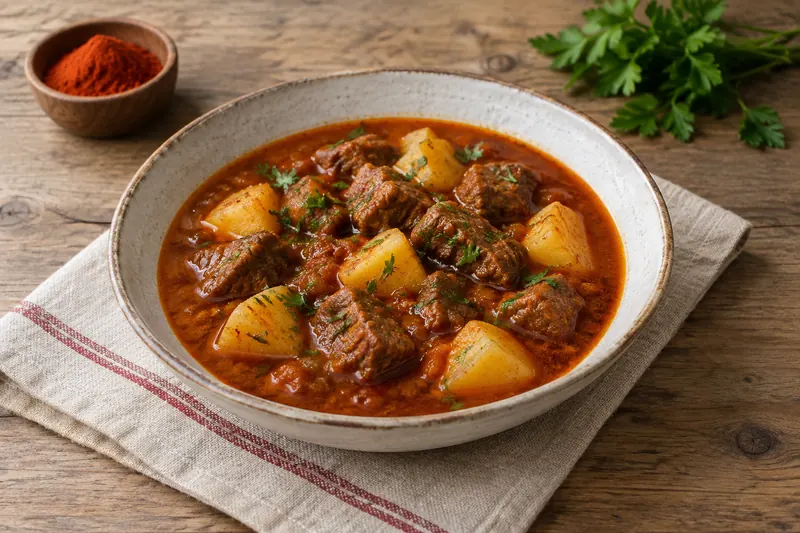 Goulash🌍 Eastern European recipes · Dinner · 3 h 20 min
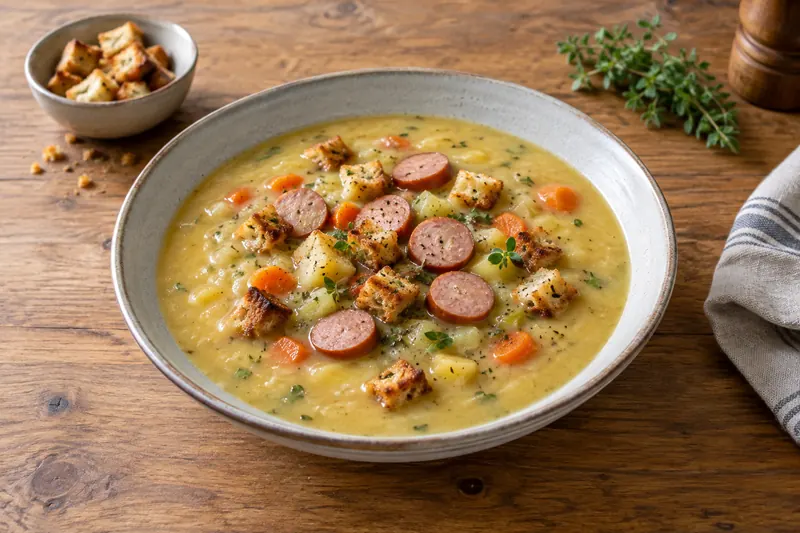 Kartoffelsuppe🇩🇪 German recipes · Lunch · 1 h
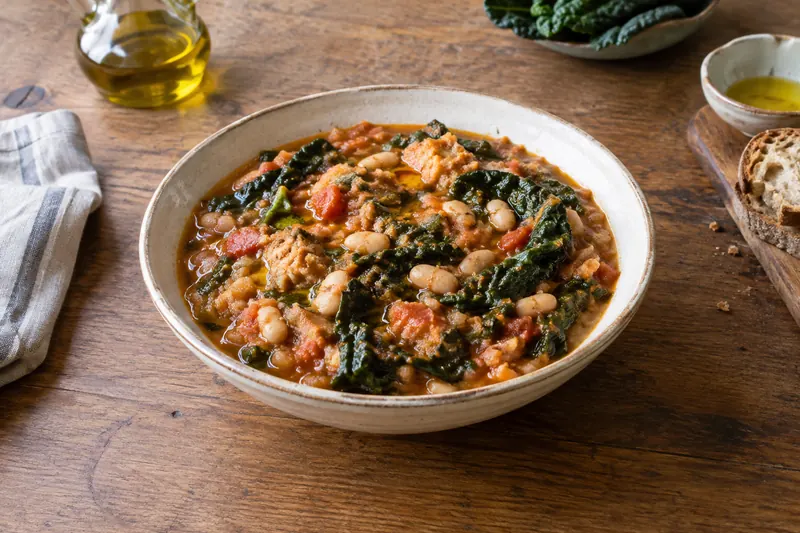 Ribollita🇮🇹 Italian recipes · Lunch · 13 h 55 min
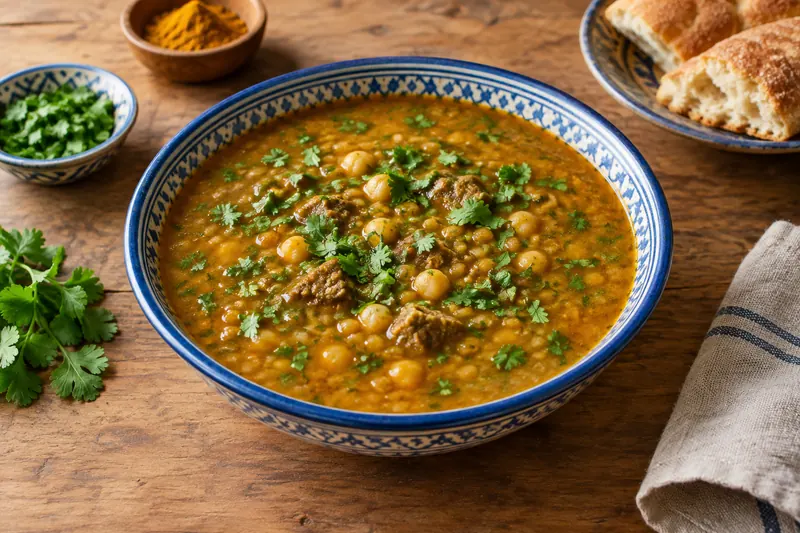 Harira🌍 North African recipes · Lunch · 2 h
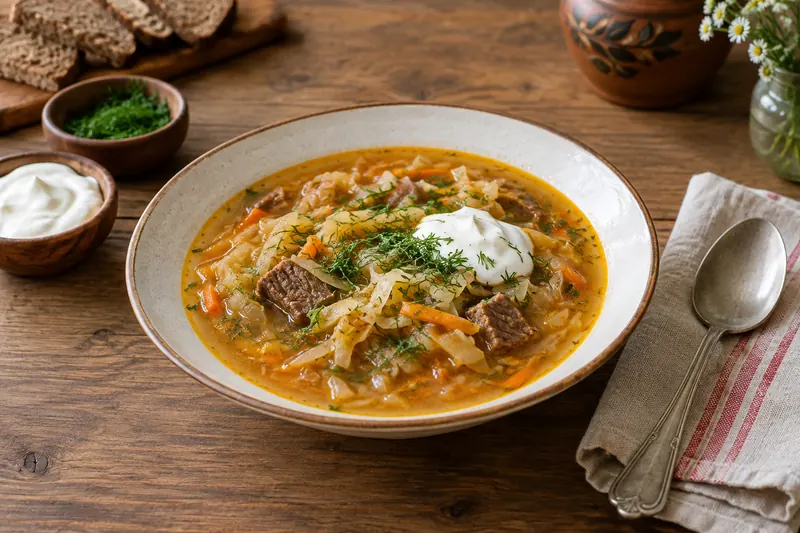 Shchi🌍 Eastern European recipes · Lunch · 3 h 30 min
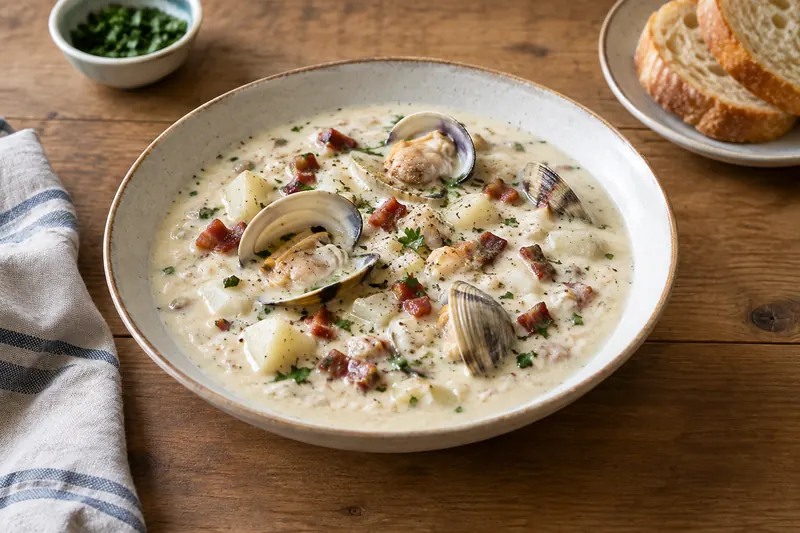 New England Clam Chowder🇺🇸 American recipes · Lunch · 1 h 10 min
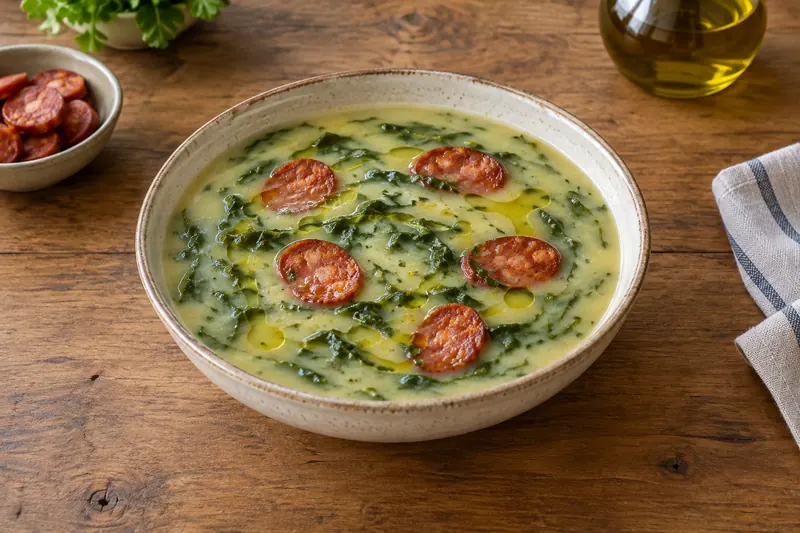 Caldo Verde🇵🇹 Portuguese recipes · Lunch · 55 min
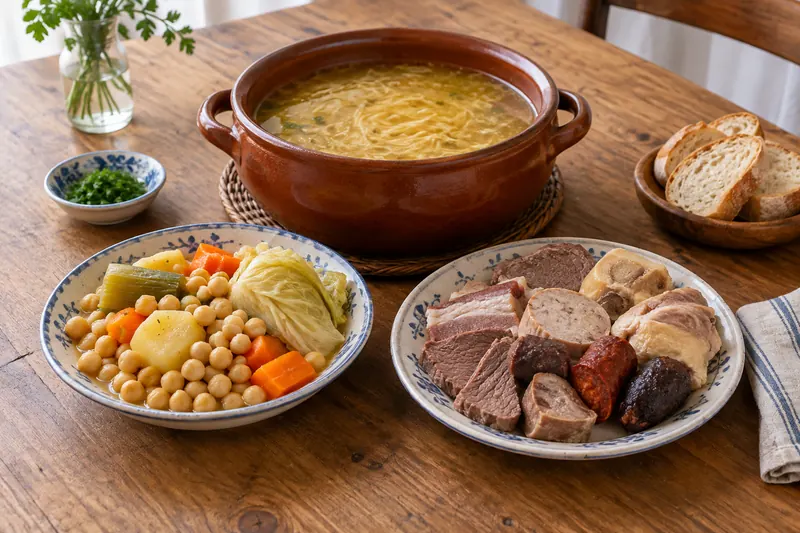 Cocido Madrileño🇪🇸 Spanish recipes · Dinner · 16 h
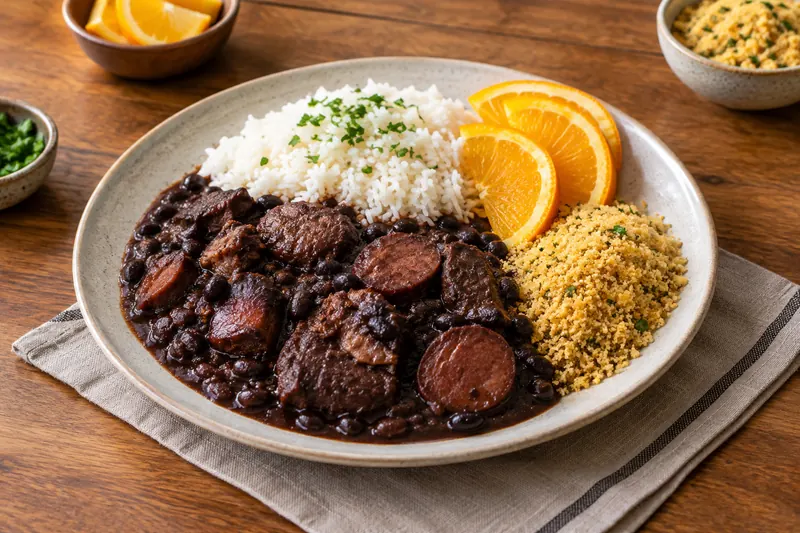 Feijoada🇧🇷 Brazilian recipes · Dinner · 11 h
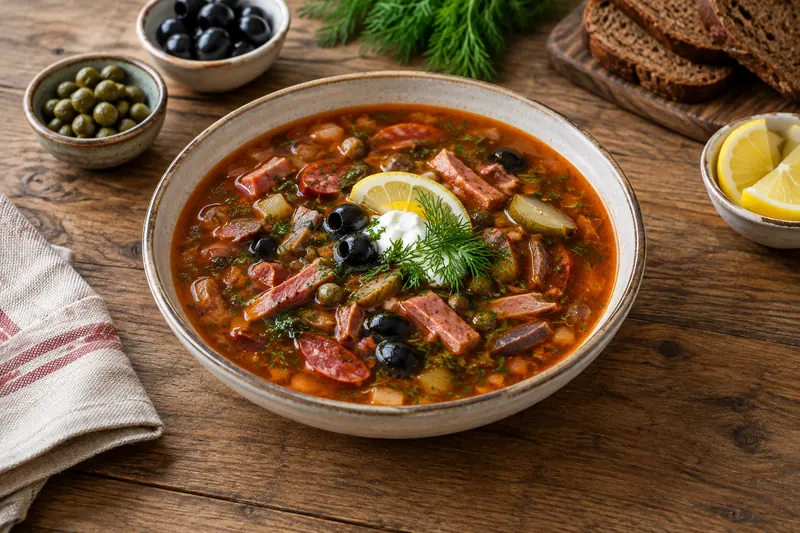 Solyanka🌍 Eastern European recipes · Lunch · 1 h 10 min
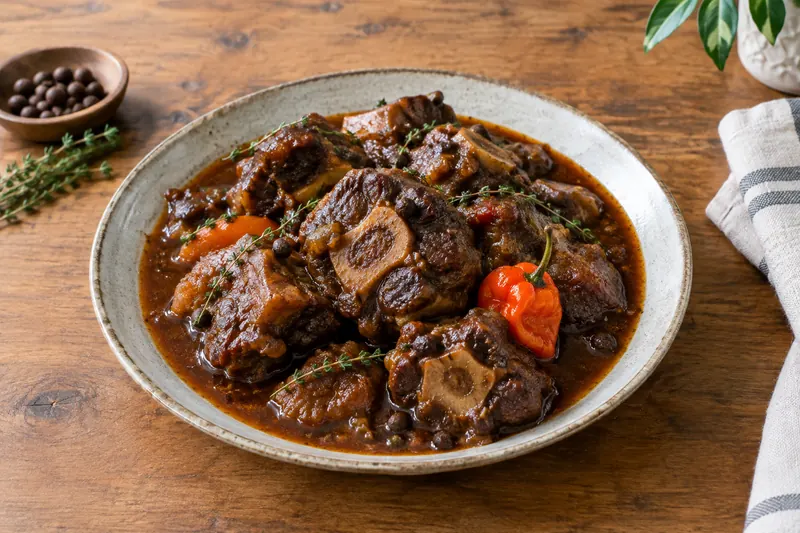 Oxtail Stew🌎 Caribbean recipes · Dinner · 5 h
How these soups and stews get their body
Many of these get their thickness from what is already in the pot. Kartoffelsuppe blends half the soup and leaves the rest in pieces, caldo verde blends potatoes cooked until they collapse, and New England clam chowder crushes a few potato pieces against the pan. Feijoada mashes a cupful of beans into the bacon and onions, and ribollita is layered with stale bread and reboiled the next day until it holds a spoon upright.
The chuck for beef stew is dusted in flour before browning, and the flour thickens the gravy as it simmers. Oxtail stew needs no thickening at all, since three hours of oxtail release enough gelatine to set the gravy to jelly in the fridge.
Where the flavour comes from
Browning builds the stews. Beef stew browns its beef in batches, because crowded it steams and goes grey, and oxtail stew starts in browning sauce and keeps going until the meat is very dark. Goulash skips it on purpose: the beef is not browned, and the paprika goes into the fat off the heat, since it burns in seconds and turns the whole pot bitter.
Sourness shapes the Eastern European soups. Borscht cooks its beetroot separately with vinegar so the colour stays deep red, shchi made with sauerkraut becomes the sour winter version, and solyanka fries sour dill pickles in the pot and adds their brine with the stock. French onion soup asks only for patience: 45 to 60 minutes of stirring until the onions are deep brown and jammy.
Making soup and stew ahead
Several are made to be eaten later. Ribollita is never served on the day it is cooked, and chilling oxtail stew overnight lets you lift the fat off in a sheet. Harira sets almost solid in the fridge, so reheat it gently with a splash of water and taste for salt afterwards.
Some parts are better added at the last minute. If you make goulash ahead, add the potatoes as it reheats, since they go grainy overnight. The blended base of caldo verde keeps for three days and freezes, with the greens and chouriço added only to the portion you are about to eat, and pumpkin soup freezes well before its crème fraîche goes in.
Frequently asked questions
- Is goulash a soup or a stew?
- Hungarian gulyás sits between the two: looser than a stew and thicker than a soup. The goulash here cooks beef shin slowly in a broth built on onions and a great deal of sweet paprika, and the starch from the potatoes, added near the end, clouds the broth slightly. For a soupier gulyás, the recipe suggests adding another 500 ml of stock at the end.
- What is the difference between borscht and shchi?
- Both are Eastern European soups built on beef broth, but the main vegetable differs. Borscht is a beetroot soup, with the beetroot cooked separately in vinegar so it stays deep red. Shchi is a cabbage soup, made with fresh cabbage, sauerkraut or both, and soured at the table with smetana. Both are served with soured cream and dill, and both are better reheated.
- What is harira?
- Harira is the Moroccan soup of tomatoes, lentils and chickpeas with a little lamb, spiced with ginger, turmeric and saffron and carrying a great deal of fresh coriander. What makes it harira rather than a lentil soup is the tadouira, a slurry of flour and water stirred in at the end to give the broth its velvety body. It is served with lemon wedges, and dates alongside if you like.
- What is cocido madrileño?
- Cocido madrileño is Madrid’s boiled dinner: chickpeas, beef shin, chicken and pork belly simmered slowly with potatoes and carrots, while chorizo, morcilla and cabbage cook in a second pan so their paprika does not turn the broth orange. It is served in three vuelcos: first the broth with fine noodles, then the chickpeas and vegetables, then the meats.
- Do soups and stews taste better the next day?
- Many of these do. Borscht is better the next day and better still the day after, feijoada and beef stew both improve overnight, and a Russian saying holds that yesterday’s shchi is better than today’s. If you cook beef stew ahead, loosen it with a splash of water as it reheats, because the potatoes drink up gravy overnight.