🇰🇷 Korean recipesSide dish
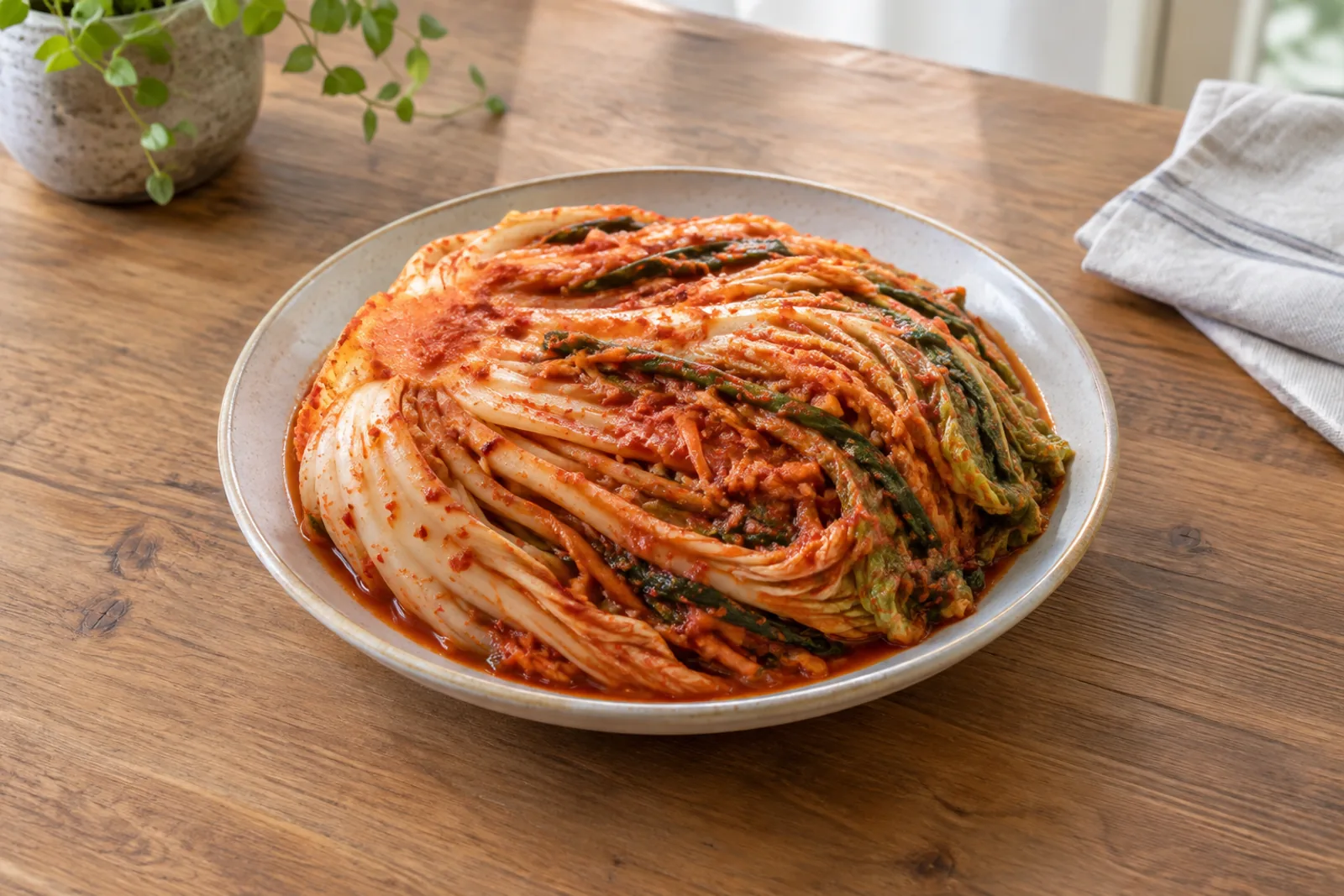
Kimchi
 By Groceree
Also known as Baechu Kimchi · Napa Cabbage Kimchi
Napa cabbage brined until it bends without snapping, then packed with a paste of gochugaru, garlic, ginger and glutinous rice porridge, and left to sour at room temperature.
Last updated
- Servings
- Makes about 2 kg
- Prep
- 1 h
- Cook
- 5 min
- Total
- 1 day 4 h
- Vegetarian
- Vegan
- Dairy-free
- Low carb
Ingredients
Brining
 napa cabbage2 kg
 coarse sea salt150 g
Paste
- glutinous rice flour2 tbsp
 caster sugar1 tbsp
- gochugaru80 g
 garlic cloves10
 ginger30 g
 daikon300 g
 spring onions6
 soy sauce2 tbsp
 water150 ml
Instructions
Brining
- 01
Quarter the lengthways, cut out the core and cut the quarters into 5 cm pieces. Toss with the in a large bowl, sprinkling more of it on the thick white stem pieces.
- 02
Leave for 2 hours, turning every 30 minutes. It is ready when a thick stem bends right over without cracking.
- 03
Rinse three times in cold water and drain properly for 30 minutes. Brine left behind makes the finished kimchi inedible rather than merely salty.
Paste and packing
- 04
Whisk the into the 150 ml cold and cook, stirring, until it thickens into a loose porridge. Stir in the and cool completely.
- 05
Crush the and grate the . Mix the cold porridge with the , the , the and the , and leave for 10 minutes to bloom into a deep red .
- 06
Peel the and cut it into matchsticks, cut the into 4 cm lengths and fold both into the , then wear gloves and rub the through the so every leaf is coated.
- 07
Pack tightly into a jar, pressing down hard so the brine rises above the vegetables. Leave a few centimetres of headroom.
- 08
Leave at room temperature for 1 to 3 days, opening daily to release the gas and push everything back under the brine.
- 09
Once it tastes pleasantly sour and fizzes faintly, move it to the fridge, where it keeps improving for months.
Notes
- Gochugaru cannot be swapped for ordinary chilli flakes. It is coarse, fruity and mild, and it is what makes kimchi red rather than merely hot.
- The rice porridge feeds the fermentation and helps the paste cling. Without it the paste slides off and slumps to the bottom.
- This version is vegan. Traditional kimchi usually carries salted shrimp or fish sauce, so add two tablespoons of either if you want the deeper savoury note.
Nutrition per serving
- Calories
- 35 kcal
- Protein
- 2 g
- Carbs
- 6 g
- Fat
- 0 g
Estimated from the ingredients.
From a video to your shopping list
Saw a recipe on Instagram, TikTok or YouTube? Share it to Groceree and the ingredients land on the list everyone at home shares.

Find a recipe video
01Find a recipe video
Any recipe on Instagram, TikTok, YouTube or a website.
Find a recipe video
Groceree02Share it to Groceree
Tap Share and pick Groceree. The app reads the recipe for you.
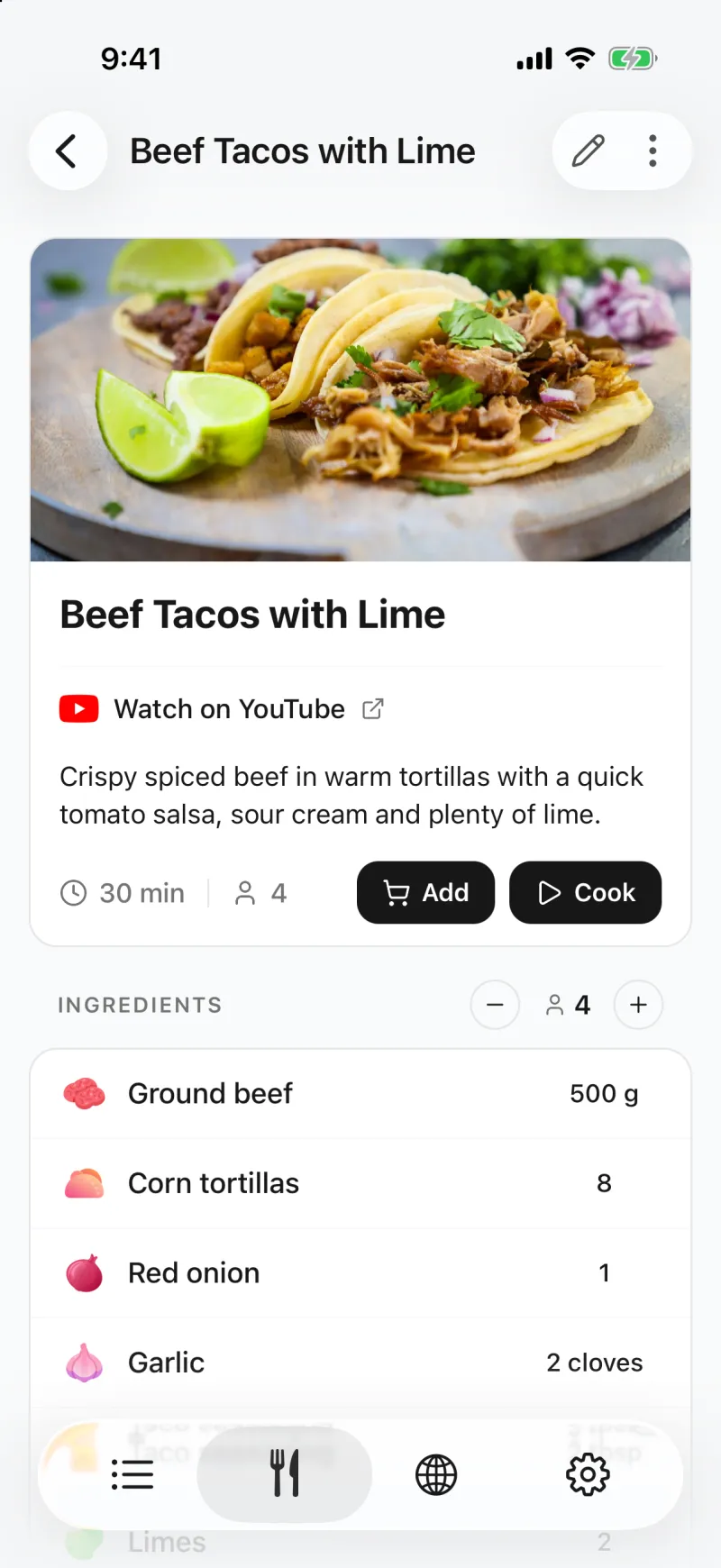 03
03The recipe is in the app
Ingredients, quantities and steps, ready to cook from.
 04
04Pick what you need
Untick what is already in the cupboard and add the rest.
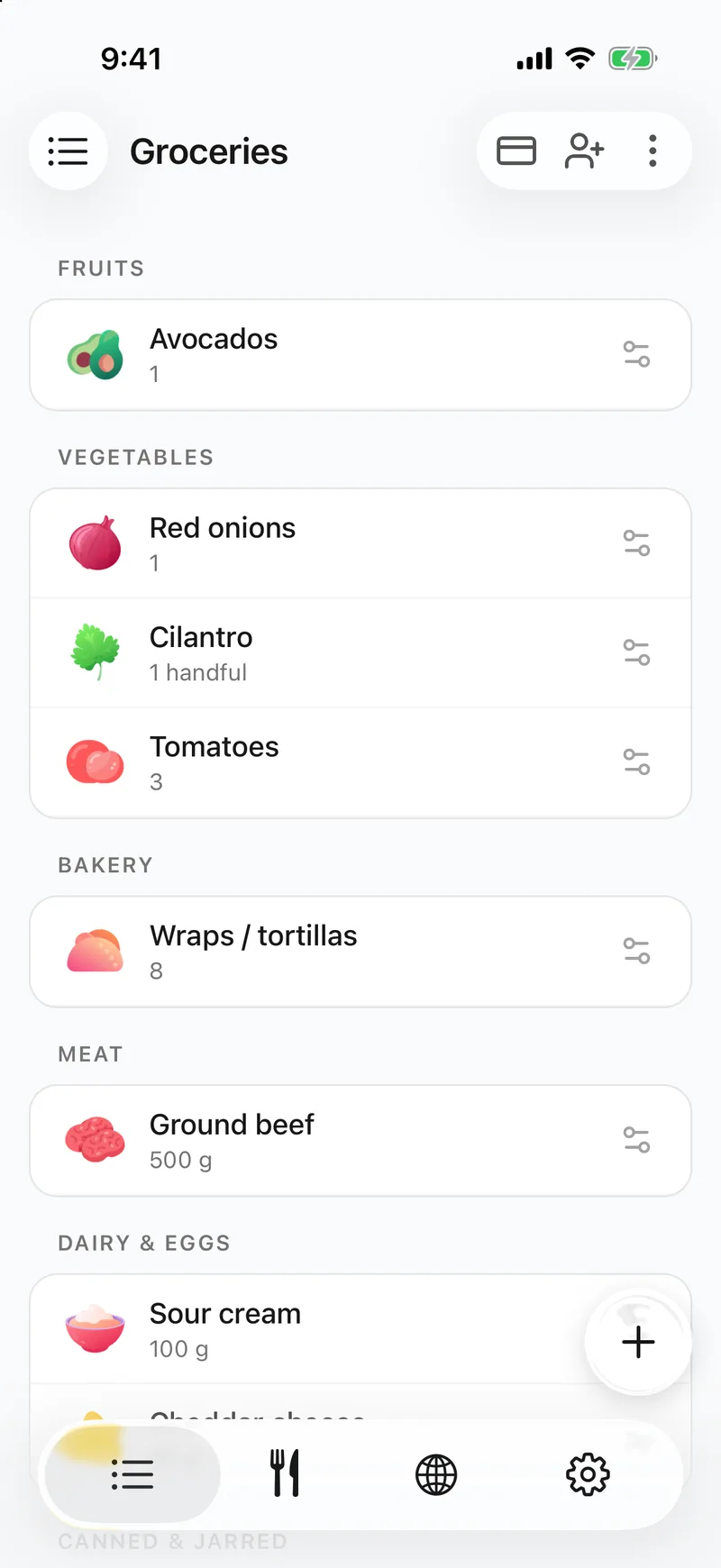 05
05It’s on the shared list
Sorted by aisle, on every phone at home, in real time.
More Korean recipes
- Gyeran JjimEggs whisked with water and salt, cooked in a hot earthenware pot until they puff up over the rim like a soufflé, soft and custardy inside, with spring onion and sesame oil. Served bubbling with Korean barbecue.
- Kimchi JeonSour, well-fermented kimchi chopped into a thin batter with its juice and fried until the edges are crisp and lacy. The best use of kimchi that has gone too far.
- Kongnamul MuchimSoybean sprouts boiled until tender but still crunchy, then tossed with garlic, spring onion, sesame oil, toasted sesame seeds, salt and, if you like, gochugaru. A banchan on almost every Korean table.